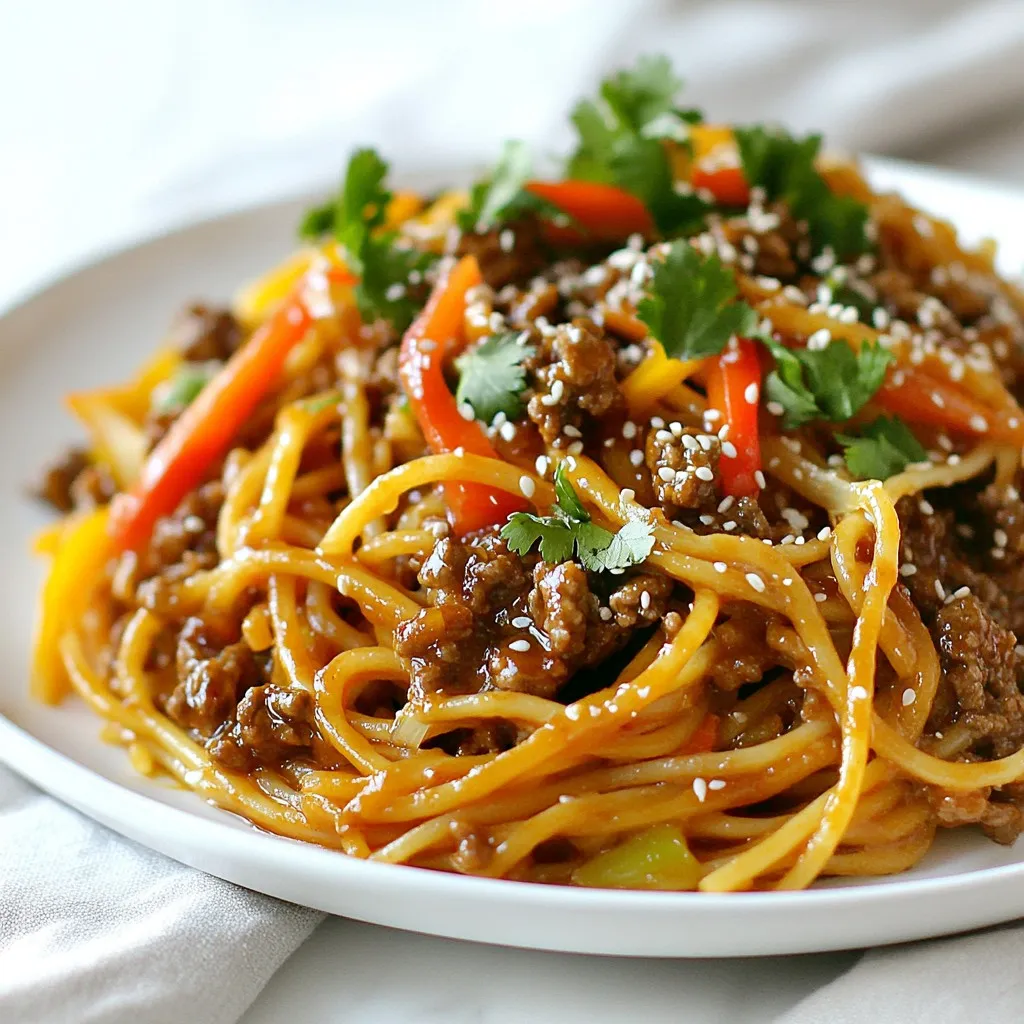
Looking for a quick and tasty dinner? Try my Asian Beef Spaghetti recipe! This dish combines the rich flavors of beef and savory sauces with al dente spaghetti. It’s packed with fresh veggies and is customizable to suit your taste. Whether you want a mild or spicy kick, this recipe makes meal prep easy and enjoyable. Get ready to impress your family with a dish they’ll love!
Why I Love This Recipe
- Quick and Easy: This recipe comes together in just 25 minutes, making it perfect for busy weeknights.
- Flavor Packed: The combination of soy sauce, hoisin sauce, and spices creates a deep, savory flavor that elevates simple spaghetti.
- Customizable: You can easily add or substitute vegetables based on what you have on hand, making it versatile for different tastes.
- Healthy Ingredients: Packed with vegetables and lean protein, this dish is a wholesome option for a satisfying meal.
Ingredients
Main Ingredients
- 200g spaghetti
- 250g ground beef
- 1 bell pepper, sliced thinly
- 1 carrot, julienned
- 3 green onions, chopped
- 2 garlic cloves, minced
- 1 inch ginger, grated
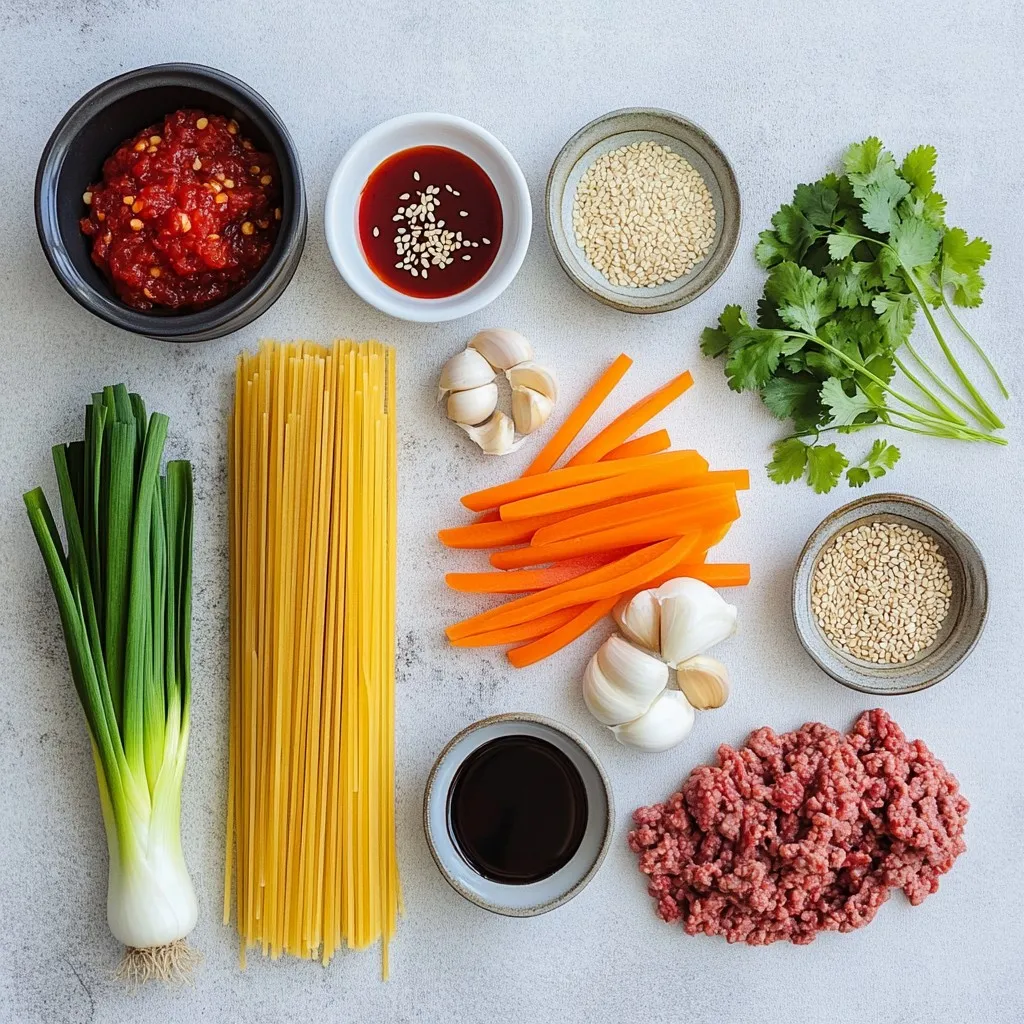
Spaghetti is the heart of this dish. It absorbs the sauce well, making each bite tasty. Ground beef adds protein and flavor, while vegetables bring crunch and color. Bell pepper and carrot make the dish bright and fun. Garlic and ginger give a warm aroma. Green onions add a fresh kick at the end.
Sauce Components
- 3 tablespoons soy sauce
- 1 tablespoon hoisin sauce
- 1 tablespoon rice vinegar
These sauces meld to create a rich flavor. Soy sauce adds saltiness, while hoisin gives a hint of sweetness. Rice vinegar adds a nice tang. Together, they coat the spaghetti and beef perfectly.
Optional Add-Ins
- 1 teaspoon chili paste (optional)
- Salt and pepper to taste
- Sesame seeds for garnish
- Fresh cilantro for garnish
Chili paste can bring heat to your dish. Adjust it based on your taste. Salt and pepper help enhance all the flavors. For a pretty look, sprinkle sesame seeds and fresh cilantro on top. These garnishes also add extra taste.
Step-by-Step Instructions
Cooking the Spaghetti
- Start by boiling a pot of salted water.
- Add 200g spaghetti to the boiling water.
- Cook it for 8-10 minutes until it is al dente.
- Stir occasionally to prevent sticking.
- Drain the spaghetti and set it aside.
Preparing the Beef
- Heat 2 tablespoons of sesame oil in a large skillet.
- Set the heat to medium-high.
- Add 250g ground beef to the skillet.
- Cook the beef until it turns brown.
- Use a spatula to break the beef into small pieces.
- Season with a pinch of salt and pepper.
Adding Aromatics and Vegetables
- Stir in 2 minced garlic cloves and 1 inch of grated ginger.
- Cook for about 1 minute until they smell great.
- Add 1 sliced bell pepper and 1 julienned carrot to the skillet.
- Sauté the vegetables for 3-4 minutes.
- Cook until they are tender but still crisp.
Combining and Tossing
- In a small bowl, whisk together the sauce.
- Mix 3 tablespoons soy sauce, 1 tablespoon hoisin sauce, and 1 tablespoon rice vinegar.
- Add chili paste if you like it spicy.
- Pour the sauce into the beef and veggie mixture.
- Stir well to coat everything in sauce.
- Add the drained spaghetti to the skillet.
- Use tongs to toss all the ingredients together.
Garnishing and Serving
- Stir in 3 chopped green onions for a fresh taste.
- Remove the skillet from heat.
- Plate the spaghetti and garnish with sesame seeds.
- Add fresh cilantro on top for extra flavor.
Tips & Tricks
Achieving the Best Flavor
To make the best Asian Beef Spaghetti, focus on your sautéing. Start with a hot skillet. This helps the beef brown nicely. Brown beef adds flavor. Use sesame oil for a rich taste. You can also mix it with a bit of vegetable oil for a balanced flavor.
When it comes to the sauce, balance is key. Use soy sauce for saltiness. Hoisin sauce adds sweet notes. Rice vinegar brings a tangy kick. If you want heat, add chili paste. Start with a little. You can always add more later.
Cooking Time Management
Cooking quickly helps keep things fresh. You can multi-task while cooking. Start boiling water for spaghetti first. Cook it while you sauté the beef and veggies. This way, everything is ready at the same time.
To keep the spaghetti from sticking, add a splash of oil to the water. Stir it well while cooking. Once it’s done, drain it right away. Rinse briefly with cold water if needed. This will help prevent sticking.
Equipment Recommendations
A non-stick skillet works best for this recipe. It makes cooking and cleaning easier. Look for one with a sturdy base for even heat. A spatula that won’t scratch the surface is also a must.
For preparation, have a good knife and cutting board ready. A peeler can help with the carrot. Using a whisk for the sauce will save time, too. These tools make your cooking flow smooth and enjoyable.
Pro Tips
- Use Fresh Ingredients: Fresh vegetables and herbs enhance the flavor of the dish significantly. Opt for seasonal produce for the best taste.
- Adjust Spice Level: For a milder dish, reduce the chili paste or omit it altogether. For more heat, add extra chili paste or fresh sliced chilies.
- Perfect Cooking Time: Be careful not to overcook the spaghetti; it should be al dente for the best texture and to hold up against the sauce.
- Garnish for Flavor: Fresh cilantro and sesame seeds not only add visual appeal but also enhance the overall flavor profile of the dish.
Variations
Protein Alternatives
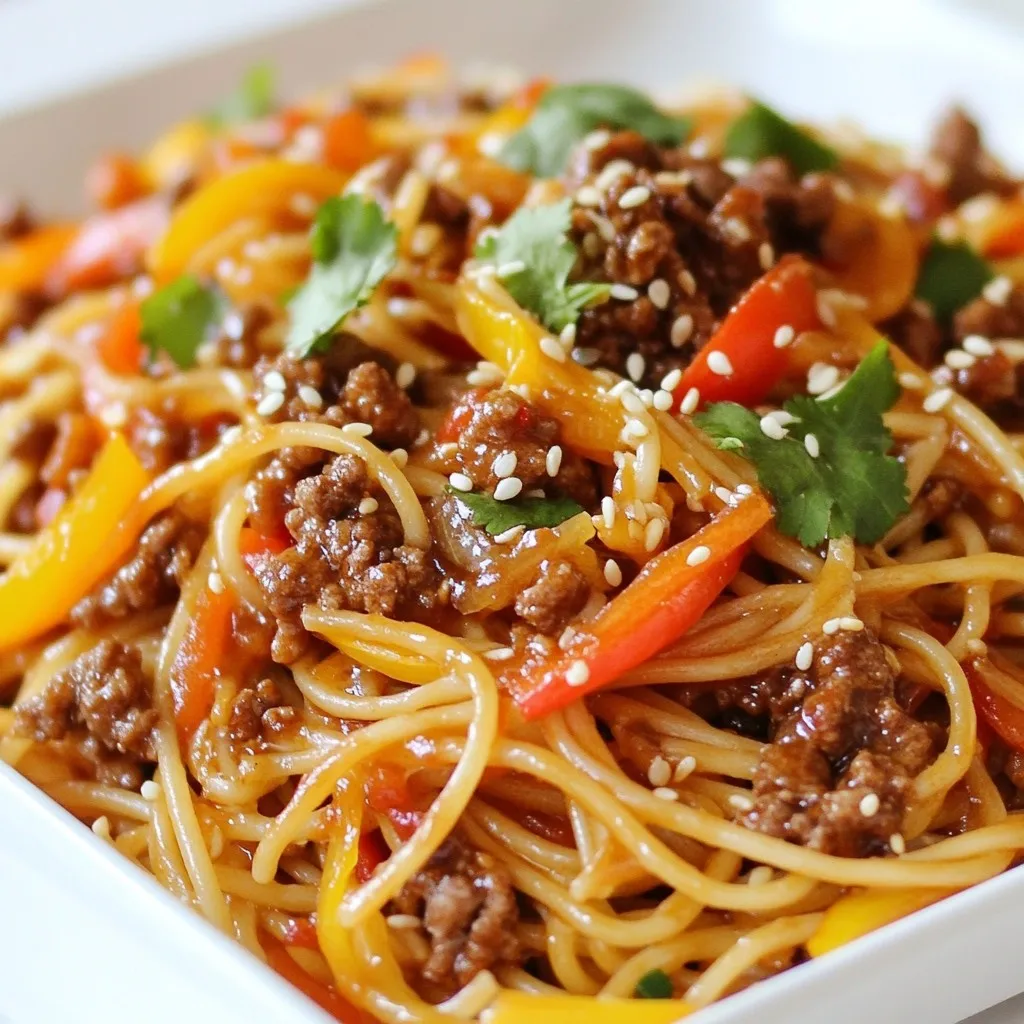
You can change the protein in Asian Beef Spaghetti. Try using chicken instead of beef. Just cook it the same way, and it will taste great. For a vegetarian option, use tofu. Press the tofu to remove water, then cube it. Cook it until golden brown. This gives it a nice texture and flavor.
Vegetable Substitutions
Feel free to swap in other veggies for this dish. Broccoli, snap peas, or zucchini work well. You can also use mushrooms for an earthy flavor. Think about using seasonal vegetables, too. In summer, add fresh corn or bell peppers. In winter, try carrots or bok choy for a warm touch.
Sauce Customizations
You can adjust the sauce to fit your taste. If you like it sweet, add more hoisin sauce. For spice, increase the chili paste. You can also make your own sauce. Mix soy sauce, garlic, and ginger with a hint of honey. This gives a fresh twist to the dish.
Storage Info
Storing Leftovers
To keep your Asian Beef Spaghetti fresh, use airtight containers. Glass or plastic containers work well. Store the spaghetti in the fridge within two hours of cooking. Make sure it cools down first. You can keep it in the fridge for up to three days.
Freezing Instructions
If you want to freeze your spaghetti, let it cool completely first. Divide it into portions for easier thawing. Place the spaghetti in freezer-safe bags or containers. Remove as much air as you can to prevent freezer burn. It can last in the freezer for up to three months.
When you’re ready to eat, thaw it overnight in the fridge. Reheat the spaghetti in a skillet over medium heat. You can also use the microwave. Add a splash of water to keep it moist.
Shelf Life
Refrigerated Asian Beef Spaghetti stays good for about three days. If you freeze it, it is safe to eat for about three months. Always check for signs of spoilage before eating.
FAQs
What can I serve with Asian Beef Spaghetti?
You can enjoy this dish with several tasty sides. Here are some ideas:
- Steamed broccoli: It adds crunch and color.
- Sesame green beans: They give a nice pop of flavor.
- Cucumber salad: This adds a refreshing touch.
For drinks, pair it with:
- Iced green tea: It complements the meal well.
- Light beer: It balances the flavors nicely.
- Sparkling water: It cleanses your palate.
Can I make this dish gluten-free?
Yes, you can easily make it gluten-free. Here are some options:
- Use gluten-free spaghetti: Many brands offer great alternatives.
- Choose tamari instead of soy sauce: It’s a gluten-free soy sauce.
For the sauce, consider these substitutions:
- Coconut aminos: This is a tasty soy sauce swap.
- Check hoisin sauce: Some brands are gluten-free. Always read labels.
How do I make Asian Beef Spaghetti spicier?
To turn up the heat, try these tips:
- Add more chili paste: Start with a little and taste.
- Use fresh chilies: Sliced jalapeños or Thai chilies work great.
Other heat sources include:
- Red pepper flakes: Sprinkle them in for extra spice.
- Sriracha sauce: Drizzle it on top for a zesty kick.
This blog post covered Asian Beef Spaghetti, from key ingredients to storage tips. You learned how to cook spaghetti, prepare beef, and mix flavors. Feel free to customize the recipe with proteins or veggies you like. Remember, every step is vital for taste. Enjoy this dish fresh or save leftovers for later. Cooking should be fun, so experiment and share your creations! With these tips, you can impress anyon
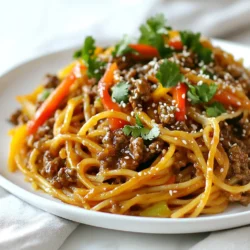
Asian Beef Spaghetti
Ingredients
- 200 g spaghetti
- 250 g ground beef
- 2 tablespoons sesame oil
- 1 bell pepper sliced thinly
- 1 carrot julienned
- 3 green onions chopped
- 2 cloves garlic, minced
- 1 inch ginger, grated
- 3 tablespoons soy sauce
- 1 tablespoon hoisin sauce
- 1 tablespoon rice vinegar
- 1 teaspoon chili paste (optional)
- to taste salt and pepper
- for garnish sesame seeds
- for garnish fresh cilantro
Instructions
- Boil a pot of salted water and cook the spaghetti according to package instructions until al dente. Drain and set aside.
- In a large skillet, heat the sesame oil over medium-high heat. Add the ground beef and cook until browned, breaking it apart with a spatula. Season with a pinch of salt and pepper.
- Stir in the minced garlic and grated ginger, cooking for about 1 minute until fragrant.
- Add the sliced bell pepper and julienned carrot to the skillet. Sauté for 3-4 minutes until the vegetables are tender-crisp.
- In a small bowl, whisk together the soy sauce, hoisin sauce, rice vinegar, and chili paste (if using). Pour the sauce into the beef and veggie mixture, stirring well to coat.
- Add the drained spaghetti into the beef and vegetable mixture. Using tongs, toss everything together until well combined, making sure the pasta is coated with the sauce.
- Stir in the chopped green onions, and remove from heat. Plate the spaghetti, and garnish with sesame seeds and fresh cilantro.
