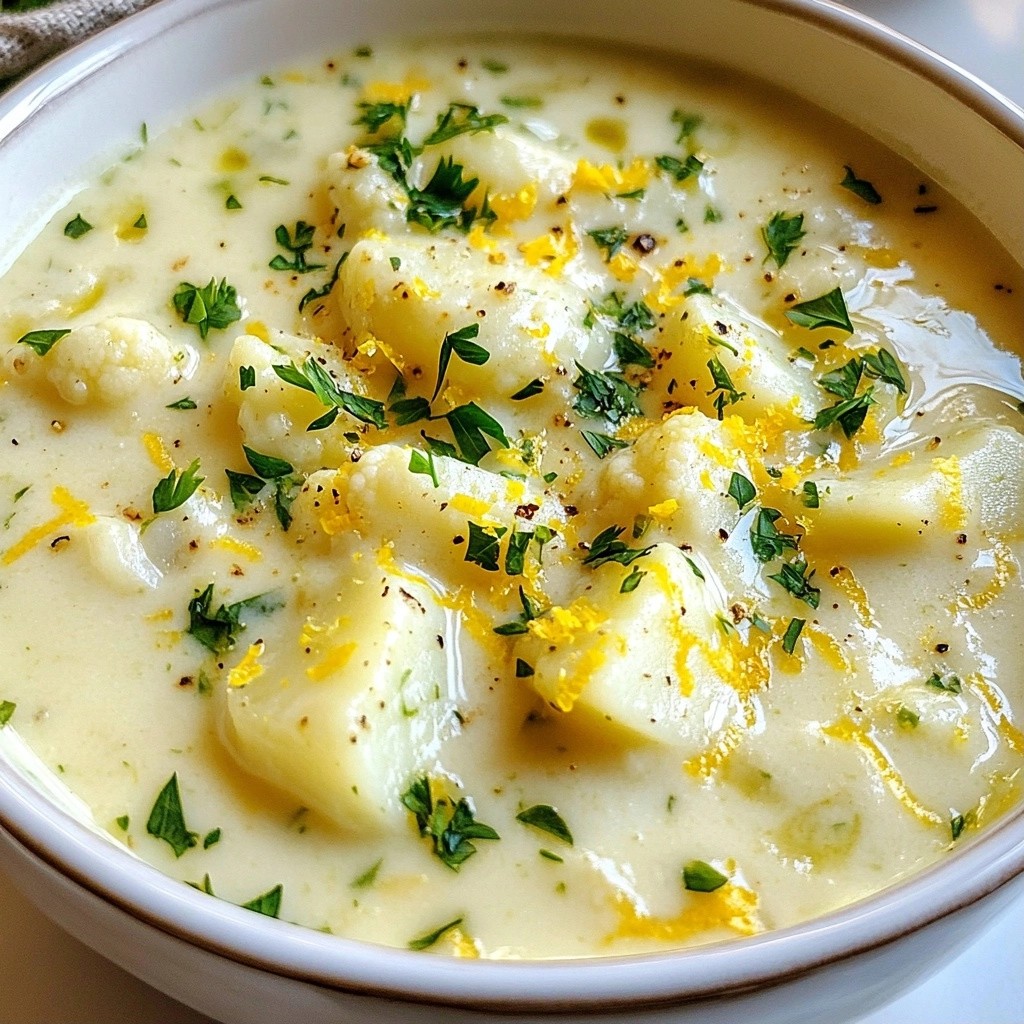
If you're craving a warm, comforting bowl of soup, my Creamy Soup Lemon Herb Cauliflower Chowder is a must-try. This chowder is rich, creamy, and packed with flavor. Plus, it’s easy to make with simple ingredients you probably already have. In this post, I’ll share my step-by-step guide, tips for perfecting the dish, and fun variations to try. Let’s dive in and make your new favorite soup!
Why I Love This Recipe
- Healthy and Nourishing: This chowder is packed with nutritious vegetables, making it a wholesome option for any meal.
- Rich and Creamy Texture: The addition of coconut milk or heavy cream creates a velvety smooth consistency that is comforting and indulgent.
- Bright and Fresh Flavor: The lemon juice and zest infuse the chowder with a refreshing brightness that elevates the dish.
- Easy to Make: This recipe comes together quickly, making it perfect for busy weeknights or a cozy weekend meal.
Ingredients
List of Ingredients
- 1 medium head of cauliflower, chopped into florets
- 1 medium onion, diced
- 3 garlic cloves, minced
- 2 medium potatoes, peeled and diced
- 4 cups vegetable broth
- 1 cup coconut milk (or heavy cream)
- 1 tablespoon olive oil
- Juice and zest of 1 lemon
- 2 teaspoons dried thyme
- 1 teaspoon dried dill
- Salt and pepper to taste
- Fresh parsley or chives for garnish
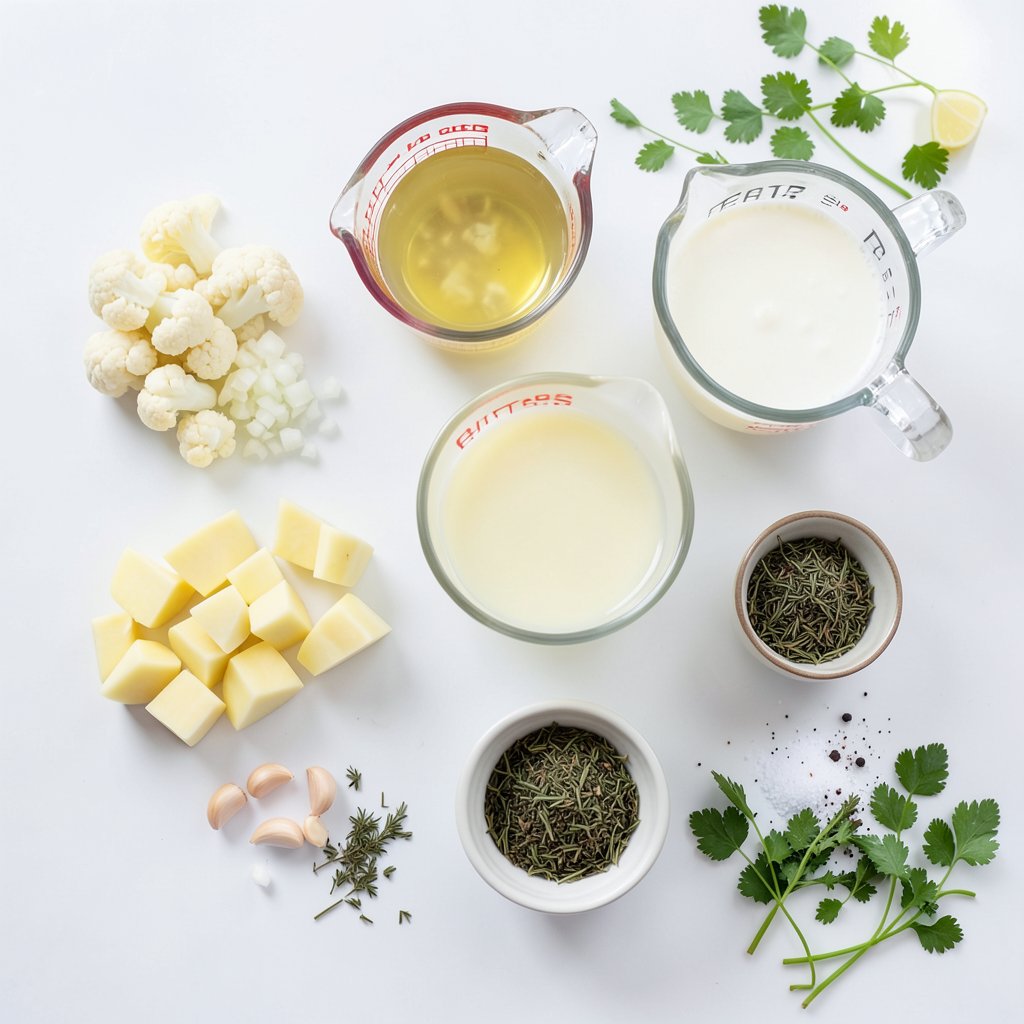
Gather these ingredients before you start. Each one plays an important role in this recipe. The cauliflower is the star, making the chowder creamy. The onion and garlic add depth and warmth. Potatoes bring a nice texture and heartiness.
You can choose coconut milk for a dairy-free option or go with heavy cream for richness. The lemon juice and zest brighten the flavor, while the dried herbs add a lovely aroma. Don’t forget the salt and pepper to enhance all those tastes.
Fresh parsley or chives make a great garnish. They add color and freshness to your bowl. With these ingredients, you're ready to create a comforting and tasty chowder that warms the soul. Enjoy the process of cooking and tasting each element as you go along!
Step-by-Step Instructions
Preparation of Vegetables
- Cooking onion and garlic
Start by heating the olive oil in a large pot over medium heat. Add the diced onion. Cook it for about five minutes until it turns soft and clear. Next, add the minced garlic. Stir and cook for one to two minutes. The garlic should smell great but not burn.
- Adding cauliflower and potatoes
Now, it's time to add the chopped cauliflower florets and peeled, diced potatoes. Stir everything together and cook for another three minutes. This helps to soften the vegetables and blend the flavors.
Cooking Process
- Boiling with vegetable broth
Pour in the four cups of vegetable broth. Bring the soup to a boil. Once it boils, reduce the heat to a simmer. Cover the pot and let it cook for 15 to 20 minutes. The cauliflower and potatoes should be tender when done.
- Blending the soup
Using an immersion blender, blend the soup until it is smooth. If you use a regular blender, let the soup cool a bit first. Blend it in small batches for safety. Return the blended soup to the pot.
Final Touches
- Incorporating coconut milk and seasonings
Stir in the one cup of coconut milk or heavy cream. Add the lemon juice and zest, too. Sprinkle in the dried thyme and dill. Season with salt and pepper to your taste.
- Serving suggestions
Let the chowder simmer for an extra five to ten minutes. This warms it up and lets the flavors mix well. Serve the soup hot and top it with fresh parsley or chives for a nice touch. Enjoy your creamy chowder!
Tips & Tricks
Best Practices for Sautéing
To get the most flavor, start by cooking the onion. Heat olive oil in a pot over medium heat. Add diced onion and cook until it turns soft, about five minutes. This step builds a great base for your chowder. Next, add minced garlic and cook for one to two minutes. This brings out a lovely aroma. When adding cauliflower, be careful not to overcook it. Cook it just long enough to allow it to soften without losing its crunch. This keeps your chowder vibrant and tasty.
Blending Techniques
You can use either an immersion blender or a regular blender. An immersion blender is simple and less messy. Just blend right in the pot! If using a regular blender, let the soup cool a bit first. Blend in small batches to avoid spills. When blending, make sure to achieve a creamy texture. If you find it too thick, add a little more vegetable broth or coconut milk. This will help create that smooth, luxurious feel.
Adjusting Seasonings
Lemon juice is key to balancing flavors. Start with a small amount and taste as you go. You can always add more, but it’s hard to take it away! For herbs, dried thyme and dill work well. But feel free to mix it up! Fresh herbs like parsley or chives can brighten the flavor even more. Customize the herbs to fit your taste, and enjoy experimenting!
Pro Tips
- Use Fresh Herbs: Fresh herbs like parsley or chives will elevate the flavor of your chowder compared to dried herbs.
- Adjust Consistency: If you prefer a thicker chowder, reduce the amount of broth or add more potatoes for added creaminess.
- Blend for Texture: For a chunkier texture, blend only half of the soup and leave some cauliflower and potato pieces intact.
- Lemon Zest Boost: Always zest the lemon before juicing; it adds a vibrant citrus aroma that enhances the chowder's flavor.
Variations
Dairy-Free Alternatives
You can make this chowder dairy-free. Use coconut milk instead of heavy cream. Coconut milk adds a rich, creamy flavor. It also gives a nice tropical twist. If you prefer, you can try nut-based creams. Almond or cashew cream works well too. They bring a smooth texture without dairy.
Additional Vegetable Options
You can add other vegetables for more nutrition. Try carrots, celery, or spinach. These veggies add color and flavor. You can also include sweet corn for a touch of sweetness. For a flavor boost, add a pinch of smoked paprika or a dash of hot sauce. These ingredients elevate the chowder and make it unique.
Serving Suggestions
This chowder pairs well with crusty bread or crispy crackers. The bread soaks up the soup, making each bite delicious. You can also serve it as a starter. It works great before a main dish. For a light meal, enjoy it on its own. Either way, you will love the creamy goodness!
Storage Info
Refrigeration Guidelines
Store your creamy soup lemon herb cauliflower chowder in an airtight container. It stays fresh for about 3 to 4 days in the fridge. Let the soup cool down before sealing it.
To reheat, pour the chowder into a pot over medium heat. Stir often to ensure it warms evenly. You can also use a microwave. Heat in short bursts of 1 minute. Stir after each minute until hot.
Freezing Instructions
You can freeze the chowder if you want to save it for later. Let it cool completely before transferring it to a freezer-safe container. Leave some space at the top, as the soup will expand when frozen.
To thaw, place the container in the fridge overnight. For quick thawing, use cold water to soak the container. Reheat as you would from the fridge. Just remember, the texture may change slightly after freezing. Stir well to bring it back together.
FAQs
Can I use fresh herbs instead of dried?
Yes, you can use fresh herbs. Fresh herbs add great flavor. For this chowder, use three times more fresh herbs than dried. If the recipe calls for two teaspoons of dried thyme, use six teaspoons of fresh thyme. Fresh herbs can brighten the taste of your chowder.
How long will the chowder last in the fridge?
The chowder lasts about three to four days in the fridge. Be sure to store it in an airtight container. To keep it fresh, let it cool before sealing. If it looks or smells off, do not eat it.
Can I add protein to the chowder?
Yes, adding protein is easy! Try cooked chicken, shrimp, or beans. You can stir in some cooked chicken just before serving. This addition makes the chowder heartier. It also boosts the nutritional value.
What is the best way to thicken the chowder?
To thicken the chowder, blend it longer. You can also add more potatoes. If you want a creamier texture, stir in some more coconut milk or heavy cream. Another option is to mix a cornstarch slurry and add it while cooking. This will help achieve the desired thickness.
This blog post explored a tasty and healthy chowder. You learned the key ingredients and how to prepare them. I shared tips for sautéing and blending. You can customize flavors and try new vegetables. Storing leftovers and reheating is simple too.
In summary, this chowder is easy to make and full of flavor. I hope you feel inspired to create your own delicious version!