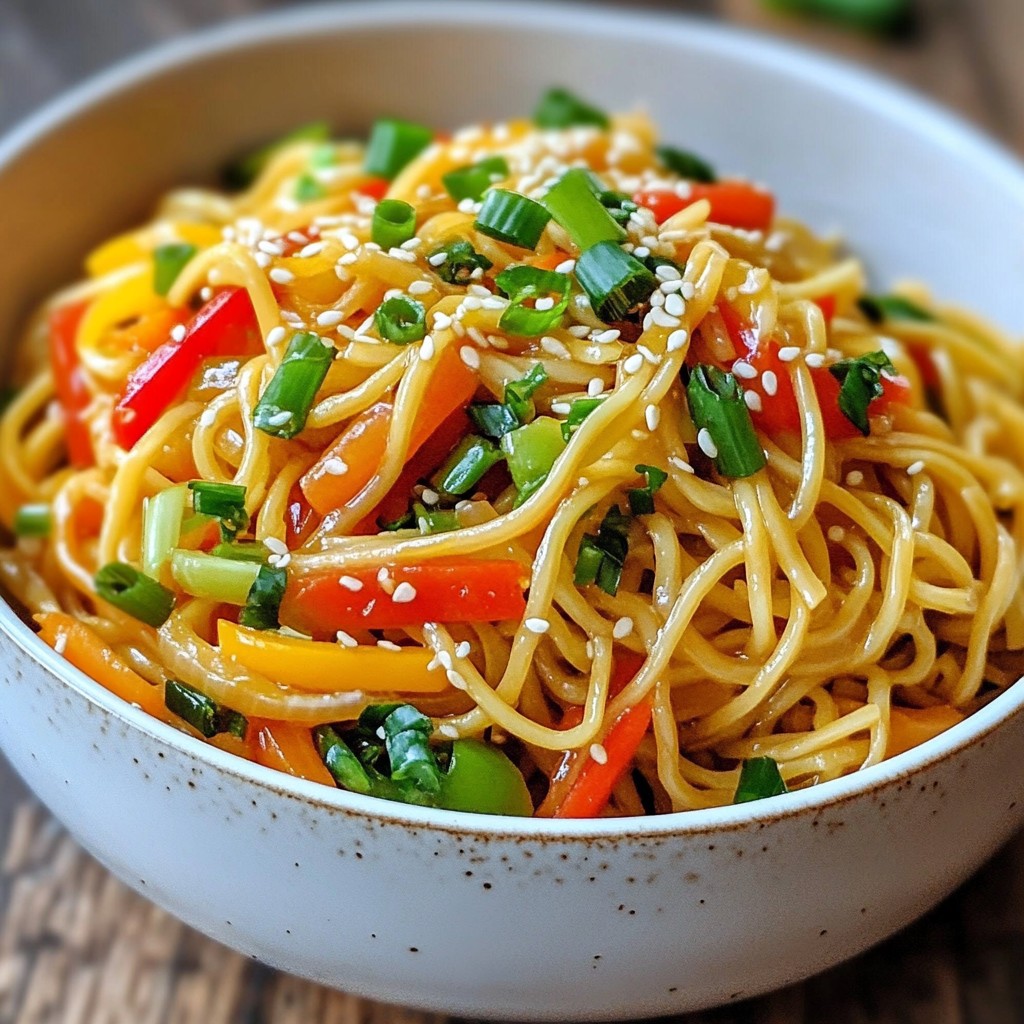
Craving a quick and tasty meal? I’ve got you covered with my Easy Chow Mein recipe! This simple dish combines fresh veggies, savory noodles, and your choice of protein in just minutes. Whether you're a busy parent or a novice cook, this guide will walk you through every step, from choosing the right ingredients to enhancing flavors. Let’s dive in and make your next meal delicious!
Why I Love This Recipe
- Quick and Easy: This recipe is perfect for busy weeknights when you want a delicious meal without spending too much time in the kitchen.
- Colorful and Nutritious: The mix of vibrant vegetables not only makes the dish visually appealing but also packs it with essential vitamins and minerals.
- Customizable: Feel free to add your favorite veggies or proteins to make this dish your own. It's a versatile base for many variations!
- Delicious Flavor: The combination of soy sauce, garlic, and sesame oil creates a savory and mouthwatering flavor that will keep you coming back for more.
Ingredients
List of Ingredients
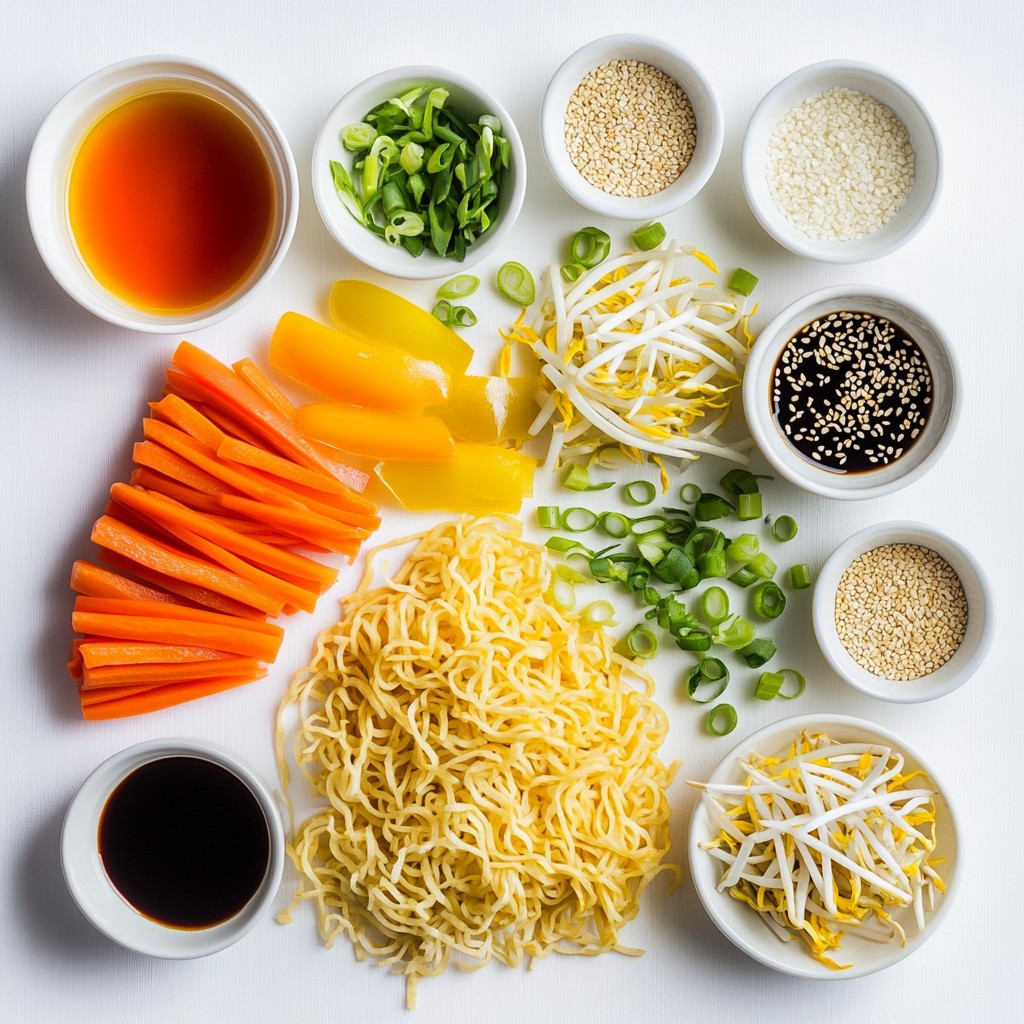
To make Easy Chow Mein, gather these key ingredients:
- 8 oz egg noodles
- 2 tablespoons vegetable oil
- 1 cup sliced carrots
- 1 cup bell peppers (mixed colors), sliced
- 1 cup bean sprouts
- 1/2 cup sliced green onions
- 3 cloves garlic, minced
- 2 tablespoons soy sauce
- 1 tablespoon oyster sauce (or hoisin sauce for a vegetarian option)
- 1 teaspoon sesame oil
- Salt and pepper to taste
- Sesame seeds for garnish
Optional Garnishes
You can make your chow mein even tastier with these garnishes:
- Extra sliced green onions
- Sesame seeds
- Lime wedges for a fresh twist
Tips for Fresh Ingredients
Using fresh ingredients makes a big difference. Here are some tips:
- Choose bright, firm vegetables for the best flavor.
- Look for egg noodles with a soft texture.
- Buy garlic that feels firm and has a strong scent.
- Keep your veggies crisp by storing them in the fridge until use.
- Use fresh herbs to add flavor and color to your dish.
Step-by-Step Instructions
Cooking the Noodles
First, get your egg noodles. Boil water in a pot. Add the noodles and cook them. Follow the package instructions for timing. When they are done, drain them well and set them aside.
Stir-Frying the Vegetables
Now, grab a large skillet or a wok. Heat 2 tablespoons of vegetable oil over medium-high heat. Add 3 cloves of minced garlic and stir for about 30 seconds. It should smell great! Next, toss in 1 cup of sliced carrots and 1 cup of sliced bell peppers. Stir-fry them for 3 to 4 minutes. They should start to soften. Then, add 1 cup of bean sprouts. Keep stirring for another minute.
Combining and Seasoning
Now it's time to bring it all together. Add the cooked egg noodles to the skillet. Stir everything well. Heat for 2 to 3 minutes. Next, drizzle in 2 tablespoons of soy sauce, 1 tablespoon of oyster sauce, and 1 teaspoon of sesame oil. Mix it all up so the noodles are coated. Finally, taste it! Add salt and pepper to your liking. When it's ready, remove it from heat. Garnish with 1/2 cup of sliced green onions and a sprinkle of sesame seeds. Enjoy your meal!
Tips & Tricks
Common Mistakes to Avoid
When making chow mein, some mistakes can ruin your dish. Here are a few to watch out for:
- Overcooking the noodles: Follow the package instructions. Overcooked noodles are mushy.
- Not prepping veggies: Cut all your vegetables before you start cooking. This makes stir-frying easy.
- Skipping the garlic: Garlic adds a great flavor. Don’t skip it, and sauté it well.
- Too much sauce: Use the right amount of soy and oyster sauce. Too much can make it salty.
Enhancing Flavor Profiles
To elevate your chow mein, try these tips:
- Fresh herbs: Add cilantro or basil for freshness. This makes a big flavor difference.
- Citrus zest: A little lime or lemon zest brightens the dish. It adds a nice kick.
- Chili flakes: If you like spice, add chili flakes. Start small and adjust to your taste.
- Sesame seeds: Toasted sesame seeds add a nutty flavor. Sprinkle them on top for crunch.
Equipment Suggestions
Having the right tools makes cooking easier:
- Wok or large skillet: A wok heats quickly and cooks evenly. A large skillet also works well.
- Wooden spatula: This helps you stir without scratching your pan. It’s perfect for flipping veggies.
- Colander: Use this to drain your noodles quickly. It helps avoid soggy noodles.
- Cutting board and knife: A sturdy cutting board and sharp knife make veggie prep safe and easy.
Pro Tips
- Cook Noodles Al Dente: This ensures that the noodles maintain a slight bite and don’t become mushy when stir-frying.
- Prep All Ingredients First: Have all your veggies sliced and sauces measured before you start cooking to make the process smoother.
- High Heat for Stir-Frying: Cooking on high heat helps achieve that signature smoky flavor and keeps the vegetables crisp.
- Customize Your Veggies: Feel free to add or substitute with your favorite vegetables like broccoli, snap peas, or zucchini for more variety.
Variations
Protein Additions (Chicken, Tofu, etc.)
You can add protein to chow mein for a heartier meal. Chicken is a popular choice. Use boneless, skinless chicken breast. Cut it into thin strips and cook it first. Sauté the chicken in the oil until it’s cooked through, then add your veggies and noodles.
Tofu is a great vegetarian option. Press the tofu to remove excess water. Cut it into cubes and fry it until golden. Add it with the veggies for a nice crunch. You can also use shrimp or beef if you like.
Vegetarian and Vegan Adaptations
To make this dish vegetarian, simply use hoisin sauce instead of oyster sauce. This keeps all the flavor without the meat. For a vegan option, ensure your noodles are egg-free. Many brands offer vegan egg noodles. You can also add extra veggies like mushrooms or bok choy for depth.
Different Vegetable Combinations
Feel free to switch up the veggies. Broccoli and snap peas add a nice crunch. Zucchini or snow peas can work well too. Use what you have in your fridge. Just remember to cut them all to similar sizes for even cooking.
Adding different vegetables not only changes the taste but also boosts nutrition. The more colors on your plate, the better!
Storage Info
Best Practices for Leftovers
Store your leftover chow mein in an airtight container. This keeps it fresh for later. Make sure to cool the dish to room temperature before sealing. If you have extra veggies, store them separately to keep them crisp.
Reheating Instructions
To reheat, use a skillet or a microwave. If using a skillet, add a splash of water. Heat on medium until warm, stirring often. If using a microwave, cover the dish and heat for one to two minutes. Check if it’s hot, and stir halfway through.
Freezing Chow Mein
You can freeze chow mein, but the texture may change. To freeze, place it in a freezer-safe container. Leave some space at the top for expansion. It can last up to three months in the freezer. When ready to eat, thaw overnight in the fridge before reheating.
FAQs
How to make noodles less sticky?
To make noodles less sticky, rinse them after cooking. This cools them down and removes excess starch. You can also toss them with a little oil right after draining. This keeps them separate.
Can I use other types of noodles?
Yes, you can use other types of noodles! Try rice noodles, udon, or even spaghetti. Each type gives a new texture and flavor. Just cook them according to their package instructions.
What to serve with Chow Mein?
Chow Mein pairs well with many dishes. You can serve it with spring rolls or dumplings for a fun meal. A light salad with sesame dressing also adds freshness. For a complete dinner, try grilled chicken or tofu on the side.
In this article, we covered how to make Chow Mein. We discussed the main ingredients, optional garnishes, and tips for fresh choices. You learned step-by-step instructions on cooking noodles and stir-frying vegetables. We shared tips to avoid common mistakes and enhance flavor. You also found protein options and storage best practices.
Chow Mein is easy and fun to make. With these tips, you can enjoy a tasty meal. Get creative and make it your own. Happy cooking!