
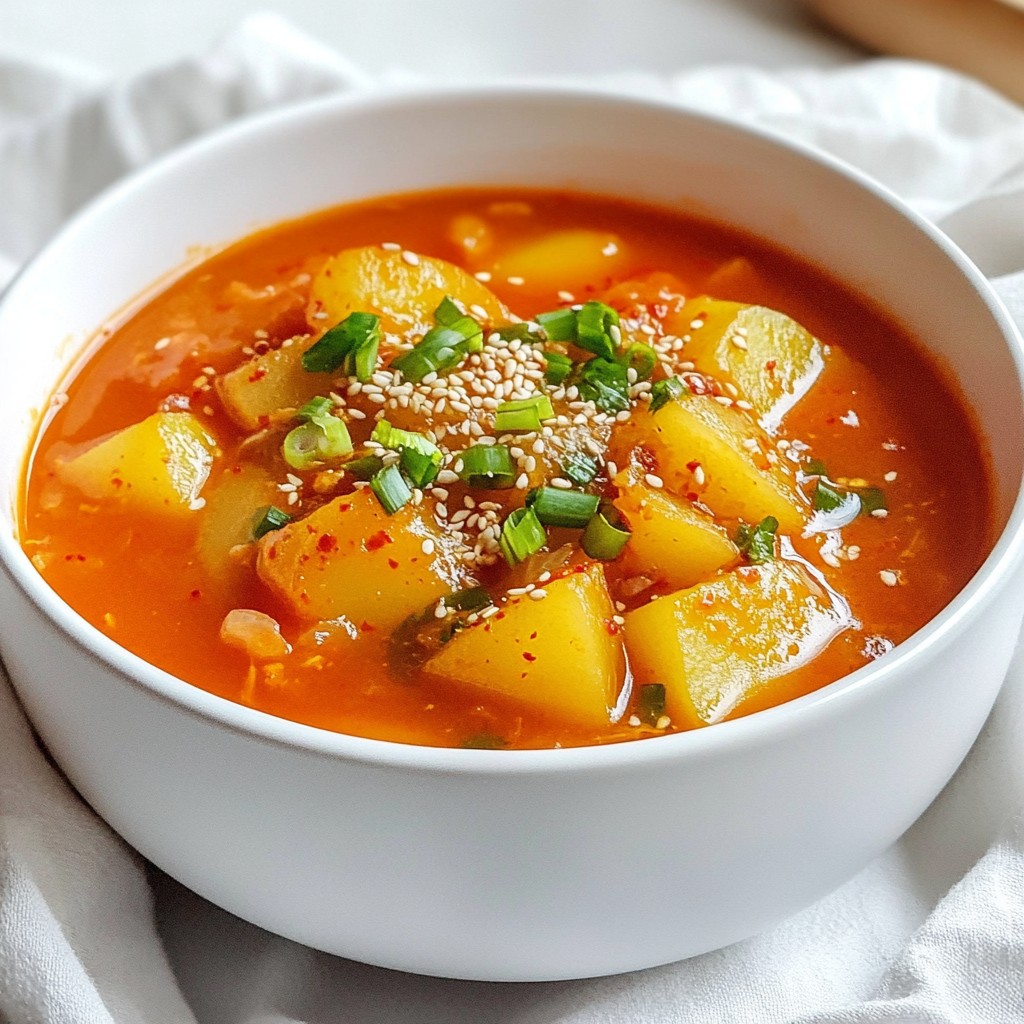
Do you crave comfort food that’s hearty and bursting with flavor? This Easy Kimchi Stew is here to satisfy your taste buds without the fuss. With just a few simple ingredients, I’ll walk you through each step to create this delicious dish. Whether you’re a busy parent or a kitchen newbie, you’ll find this flavorful recipe easy to master. Let’s dive in and make a warm bowl of joy together!
Why I Love This Recipe
- Bold Flavors: This stew brings together the rich, fermented taste of kimchi with a spicy kick that warms the soul.
- Comfort Food: Korean kimchi stew is the ultimate comfort food, perfect for cozy evenings or chilly days.
- Quick and Easy: With a prep time of just 20 minutes, this recipe is simple enough for a weeknight dinner.
- Customizable: You can easily adjust the spice levels and add your favorite vegetables or proteins for a personal touch.
Ingredients
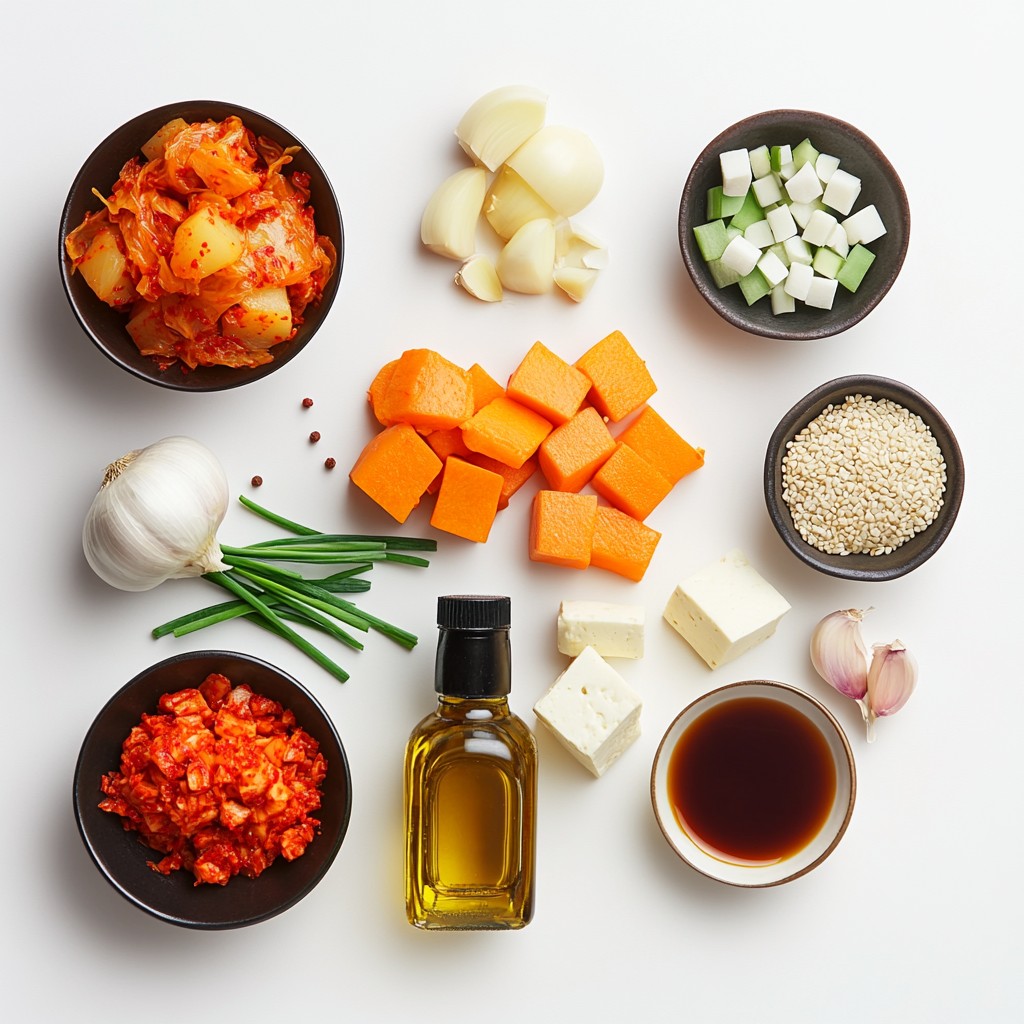
Main Ingredients for Easy Kimchi Stew
- 2 cups fermented kimchi, chopped
This is the star of the dish. It brings heat and tang.
- 1 tablespoon vegetable oil
Use this to sauté your aromatics and start the stew.
- 1 onion, diced
This adds sweetness and depth to the stew.
- 3 cloves garlic, minced
Garlic gives the stew a fragrant kick.
- 1-inch piece of ginger, grated
Ginger adds warmth and a bit of spice.
- 1 medium potato, diced
It helps to thicken the stew and adds heartiness.
- 1 carrot, diced
Carrots bring a nice sweetness and color.
- 4 cups vegetable broth
This is the base of your stew, making it rich and flavorful.
- 1 tablespoon gochugaru (Korean red pepper flakes)
This gives the stew its signature spice.
- 1 tablespoon soy sauce
Soy sauce adds umami and color.
- 1 teaspoon sesame oil
It adds a nutty flavor that complements the dish.
Optional Ingredients
- 1 cup tofu, cubed (optional)
Tofu adds protein and a nice texture.
- Green onions, chopped for garnish
They add a fresh crunch on top.
- Sesame seeds for garnish
These add a nutty crunch and a nice look.
Step-by-Step Instructions
Preparing the Aromatics
Start by heating vegetable oil in a large pot over medium heat. Add the diced onion first. Sauté it until it turns translucent, which takes about 5 minutes. This step builds a good base for your stew.
Next, stir in the minced garlic and the grated ginger. Keep stirring for one more minute until you smell the lovely aroma. This mix of onion, garlic, and ginger brings depth to the stew.
Cooking the Vegetables
Now, it's time to add the diced potato and carrot. Stir them into the pot and cook for a few more minutes. This helps them soften slightly before adding more ingredients. The right texture is key for a hearty stew. You want your veggies to be tender but not mushy.
Finalizing the Stew
Once the vegetables soften, it's time to add the chopped kimchi. Let it cook for about 2-3 minutes. This step enhances the flavors of the kimchi, making it more vibrant.
Next, pour in the vegetable broth along with the gochugaru, soy sauce, and sesame oil. Bring it all to a boil. After boiling, reduce the heat to low and let it simmer for about 20 minutes. This allows the flavors to meld together beautifully.
If you like tofu, gently stir in the cubed pieces after the simmering. Cook for another 5 minutes to warm the tofu through. Lastly, taste the stew. Adjust the seasoning by adding more soy sauce or gochugaru if needed.
Tips & Tricks
How to Enhance Flavor
To make your kimchi stew even better, adjust the seasonings.
- Gochugaru: Add more if you love spice. Start with a little, and taste.
- Soy Sauce: Use low-sodium soy sauce for a lighter taste. This keeps it balanced.
Balancing spice and flavor is key. If it’s too spicy, add a little sugar. It helps tone down heat. You can also add more broth to dilute the spice.
Cooking Techniques for Beginners
When making kimchi stew, use these essential tools:
- A large pot for cooking.
- A sharp knife for chopping.
- A cutting board for safety.
Avoid common mistakes. One big mistake is not cooking the aromatics long enough. Cook them until soft and fragrant.
Another mistake is adding kimchi too early. Let it cook for a few minutes to deepen the flavor.
These tips will help you make a delicious kimchi stew every time!
Pro Tips
- Enhance the Flavor: Allow the kimchi to sauté for a few minutes before adding the broth. This step helps to deepen the flavors and aroma of the stew.
- Adjust the Spice Level: Customize the spiciness of your stew by varying the amount of gochugaru. Start with a smaller amount and add more if you prefer extra heat.
- Make it Creamy: For a richer stew, add a splash of coconut milk or heavy cream just before serving. This adds a lovely creaminess that balances the spice.
- Storage Tips: Leftover kimchi stew can be stored in the refrigerator for up to 3 days. Reheat gently on the stove, adding a little extra broth if it thickens too much.
Variations
Vegan and Vegetarian Options
To make this dish vegan or vegetarian, you can swap out some ingredients. Use vegetable broth instead of meat broth. Skip the tofu if you want a lighter stew. You can also add more veggies for extra flavor and nutrition. Mushrooms or eggplant work well as meat substitutes. For a gluten-free option, make sure to use gluten-free soy sauce. This keeps the stew tasty and safe for all diets.
Creative Add-ins
Adding more vegetables can enhance your kimchi stew. Try adding bell peppers, zucchini, or spinach. These veggies add color and health benefits. You can also change the spice level of your stew. For a spicy version, add more gochugaru or some fresh chili peppers. If you prefer it mild, use less gochugaru. Adjusting these elements lets you create your perfect bowl. Enjoy mixing flavors and textures!
Storage Info
How to Store Leftover Kimchi Stew
To keep your kimchi stew fresh, let it cool to room temperature first. Then, pour it into an airtight container. This helps to lock in flavors and prevents spills. You can refrigerate it for up to four days. Make sure to label your container with the date for easy tracking.
For long-term storage, freezing is a great option. Divide the stew into smaller portions. This way, you can heat only what you need. Use freezer-safe bags or containers, and try to remove as much air as possible. Kimchi stew can last in the freezer for up to three months.
Reheating Instructions
When reheating kimchi stew, the stovetop method works best. Pour the stew into a pot and heat over medium-low heat. Stir occasionally to ensure even heating. This keeps the flavors vibrant.
If you need to use a microwave, transfer the stew to a microwave-safe bowl. Cover it loosely and heat in short bursts, stirring in between. This helps to maintain the texture of the vegetables and tofu.
Always taste the stew after reheating. You may want to add a splash of soy sauce or sesame oil to boost the flavor. Enjoy your warm kimchi stew with rice for a perfect meal!
FAQs
What is kimchi stew?
Kimchi stew, known as kimchi jjigae, is a popular Korean dish. It mixes fermented kimchi with vegetables in a rich broth. This stew has roots in Korean history. Many families enjoy it as a comfort food. The stew often includes ingredients like tofu, pork, or seafood. The blend of spicy, sour, and savory flavors makes it truly unique.
Can I make kimchi stew without tofu?
Yes, you can make kimchi stew without tofu. If you want protein, consider using chicken, beef, or mushrooms. These options add flavor without changing the dish too much. You can also add beans or lentils for a plant-based choice. Just adjust the cooking time to ensure everything cooks evenly.
How do I adjust the spice level?
To control the spice in your kimchi stew, start with less gochugaru. You can always add more later if you want more heat. Another tip is to add sugar, which can balance the spice. If the stew gets too spicy, mix in more broth or coconut milk. This will help tone down the heat while keeping the flavor.
You learned how to make easy kimchi stew with simple steps. We covered main ingredients like kimchi, vegetables, and essential seasonings. Cooking tips helped you avoid common mistakes. You also discovered how to store and reheat leftovers.
In making kimchi stew, you can customize it to fit your taste. Whether you like it spicy or mild, there's an option for you. Enjoy this tasty dish and make it your own!