
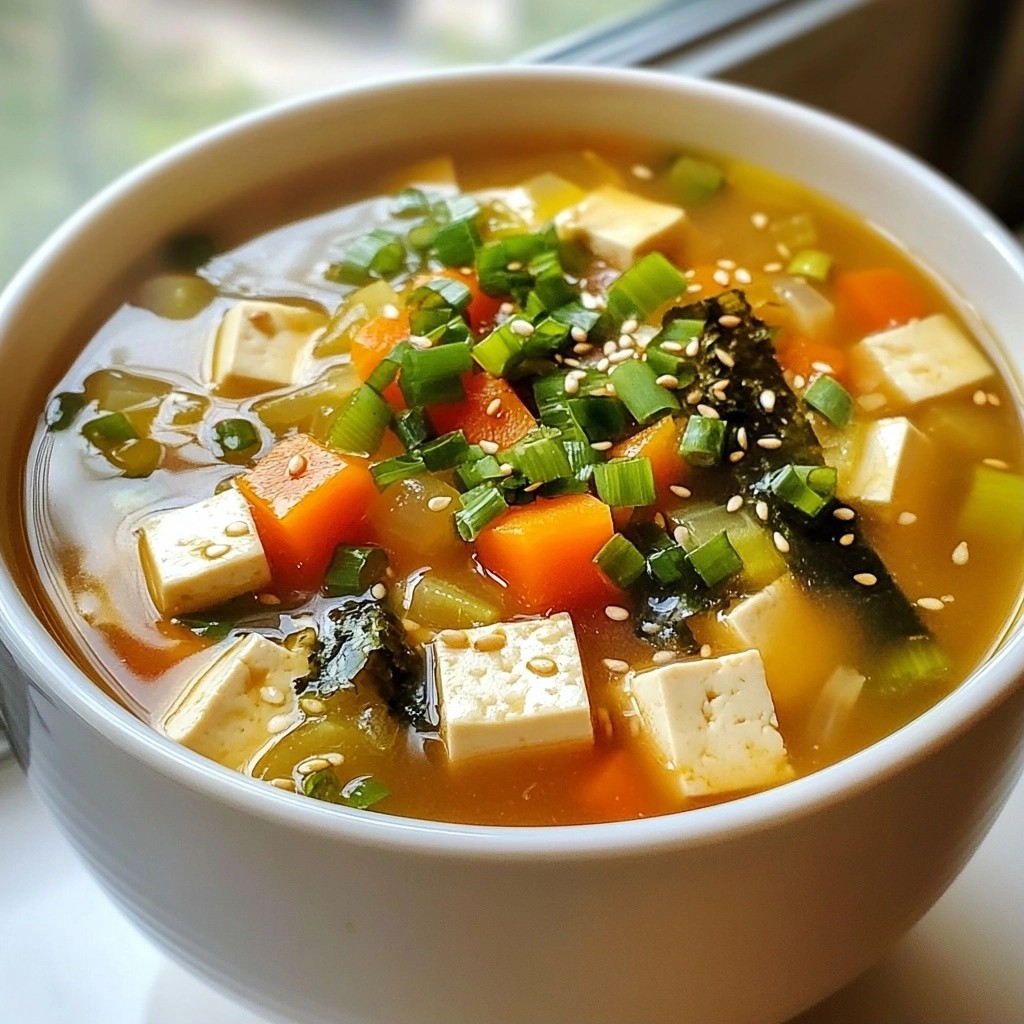
Are you ready to warm up with a bowl of healthy miso soup? This easy recipe combines tofu and seaweed into a comforting dish that's full of flavor. Miso soup is not just delicious; it offers numerous health benefits too. In this guide, I'll share everything you need to make the perfect bowl, from the ingredient list to storage tips. Let’s get started on your new favorite soup!
Why I Love This Recipe
- Nutritious Boost: This miso soup is packed with vitamins and minerals, making it a healthy choice for any meal.
- Comforting Flavor: The umami-rich miso combined with fresh ingredients creates a warm and comforting taste.
- Quick and Easy: With a total prep and cook time of just 30 minutes, this recipe is perfect for busy weeknights.
- Customizable: You can easily modify this soup by adding your favorite vegetables or adjusting the spice level.
Ingredients
Complete Ingredient List
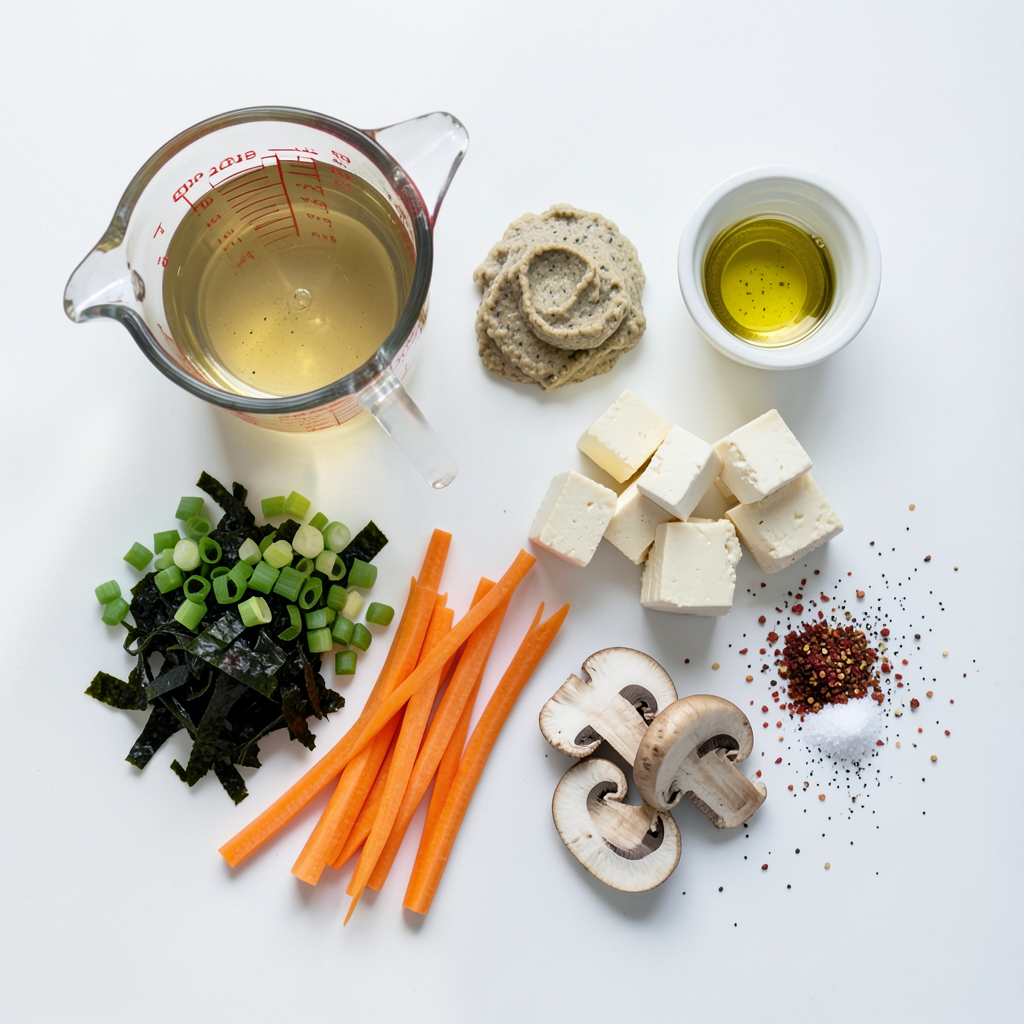
To make a healthy miso soup, you will need:
- 4 cups vegetable broth
- 3 tablespoons miso paste (white or yellow)
- 200g firm tofu, cubed
- 1 cup dried seaweed (wakame or kombu)
- 1 cup green onions, chopped
- 1 carrot, julienned
- 1 cup sliced mushrooms (shiitake or button)
- 1 teaspoon sesame oil
- A pinch of red pepper flakes (optional)
- Salt and pepper to taste
Optional Ingredients for Customization
You can change your miso soup to fit your taste. Here are some options:
- Add bok choy for extra greens.
- Use other mushrooms like enoki or oyster.
- Mix in some ginger for a spicy kick.
- Top with sesame seeds for crunch.
- Use different types of miso for new flavors.
Nutritional Benefits of Each Ingredient
Each ingredient in this soup brings health benefits:
- Vegetable broth: Provides vitamins and minerals with low calories.
- Miso paste: Packed with probiotics, good for gut health.
- Tofu: A great source of protein, low in calories, and full of iron.
- Seaweed: Rich in antioxidants and iodine, supports thyroid health.
- Green onions: High in vitamin K and may boost heart health.
- Carrots: Full of beta-carotene, good for eye health.
- Mushrooms: Offer vitamin D and boost the immune system.
- Sesame oil: Contains healthy fats and adds flavor.
- Red pepper flakes: Can boost metabolism and add a spicy touch.
These ingredients work together to make a delicious, healthy soup. Enjoy the flavors and health benefits!
Step-by-Step Instructions
Preparation Steps
Start by soaking the dried seaweed in warm water. This takes about 10 to 15 minutes. The seaweed will expand and soften. Once done, drain it and set it aside. Next, chop the green onions, julienne the carrot, and slice the mushrooms. Make sure the tofu is cubed evenly for best results. These steps help create a balanced soup.
Cooking the Soup
In a large pot, heat the vegetable broth over medium heat. Add the sliced mushrooms and julienned carrot. Let them simmer for 5 to 7 minutes. This cooking time ensures the vegetables become tender. While they cook, mix the miso paste in a small bowl with a ladle of warm broth. Stir until smooth. Once the mushrooms and carrots are tender, gently stir in the cubed tofu and the soaked seaweed.
Now, reduce the heat to low. Add the miso mixture to the pot, stirring well. Avoid boiling the soup after adding the miso. High heat can ruin its flavor and health benefits. Finally, add sesame oil, red pepper flakes, salt, and pepper to taste. Let the soup simmer for another 2 to 3 minutes to heat through.
Final Touches and Serving Suggestions
Right before serving, stir in the chopped green onions. This adds a fresh crunch to the soup. For an appealing presentation, serve the soup in warm, deep bowls. You can also garnish with extra green onions and a sprinkle of sesame seeds. Enjoy your healthy and comforting miso soup!
Tips & Tricks
Best Practices for Miso Soup
To make the best miso soup, start with good broth. Use fresh vegetable broth for deep flavor. Miso paste should be fresh and stored well. It can lose taste over time. Always add miso at low heat. High heat will kill its health perks. Stir well to blend the miso smoothly into the soup.
Common Mistakes to Avoid
Don't boil the soup after adding miso paste. This ruins the taste and benefits. Also, watch the salt. Miso is salty, so add it slowly. Too much salt can make your soup unbalanced. Lastly, don’t skip on the green onions. They add a fresh taste and nice crunch.
Enhancing Flavor and Texture
For extra flavor, try adding a splash of soy sauce or a dash of lime juice. This can brighten the taste. You can also mix in a few slices of ginger for warmth. For texture, add more veggies like bok choy or snap peas. Each bite will be a new delight!
Pro Tips
- Use Fresh Ingredients: Fresh vegetables and high-quality tofu will enhance the flavor and nutritional value of your miso soup.
- Experiment with Miso Types: Different types of miso (white, yellow, red) offer varying levels of saltiness and depth of flavor, so feel free to try them out!
- Add More Protein: For an extra protein boost, consider adding edamame or chickpeas along with the tofu.
- Customize Your Toppings: Top your soup with sesame seeds, sliced chili peppers, or a dash of lime juice for added flavor and presentation.
Variations
Different Types of Miso to Use
You can use different types of miso in your soup. Each type brings a unique flavor. White miso is mild and sweet. Yellow miso is richer and slightly salty. Red miso is strong and savory. You may want to mix them for a complex taste. Try them out to find your favorite.
Alternative Proteins and Vegetables
If you want to switch things up, use different proteins and veggies. You can try chickpeas or edamame for a plant-based boost. Adding spinach or bok choy gives more greens. You can also use zucchini or bell peppers for added crunch. The soup is flexible, so feel free to experiment.
Vegan and Gluten-Free Options
To make the soup vegan, use a plant-based miso that is gluten-free. Look for miso made from brown rice or chickpeas. Ensure your vegetable broth is also gluten-free. This way, everyone can enjoy a warm bowl of soup. The flavor remains rich and satisfying, even without animal products.
Storage Info
How to Store Leftover Miso Soup
To keep your miso soup fresh, store it in an airtight container. You can place it in the fridge for up to three days. Make sure it cools down first before sealing. This helps keep the flavors intact. Avoid letting it sit out for too long. Bacteria can grow quickly in warm soup.
Freezing Instructions
If you want to save miso soup for later, freezing is a great option! Use a freezer-safe container or a resealable bag. Leave some space at the top for expansion. It can stay good in the freezer for up to three months. Just remember, the texture of tofu may change when frozen, but the flavor remains.
Reheating Tips for Optimal Flavor
When you’re ready to eat your soup, reheat it on the stove. Use low heat to warm it gently. Stir often to avoid hot spots. If you see it bubbling, turn down the heat. This keeps the miso's taste strong and fresh. You can also add a splash of water if it’s too thick. Enjoy your soup warm, garnished with fresh green onions!
FAQs
What is miso paste and its health benefits?
Miso paste is a thick paste made from fermented soybeans. It has a rich, salty flavor. Miso is packed with nutrients. It contains protein, vitamins, and minerals. It also has probiotics, which help your gut. Eating miso can boost your immune system. It may also lower blood pressure and cholesterol.
Can I make miso soup without tofu?
Yes, you can make miso soup without tofu. You can skip the tofu if you prefer. Try adding more vegetables instead, like spinach or bok choy. You can also use other proteins, like shrimp or chicken, if you like. Just remember to adjust the cooking time to keep the soup tasty.
How long can I store miso soup in the fridge?
You can store miso soup in the fridge for about three days. Keep it in an airtight container to maintain freshness. When you’re ready to eat it, reheat it gently. Avoid boiling the soup again, as this can change its flavor. Enjoy your soup warm for the best taste!
This blog post covers how to make miso soup, from gathering ingredients to expert tips. You learned about the key ingredients and their benefits, along with simple steps for cooking delicious soup. I shared tips to avoid common mistakes and ways to customize your dish. We explored variations and storage options to make meal prep easy.
Miso soup is versatile and healthy, making it perfect for any meal. Enjoy making it your own!