
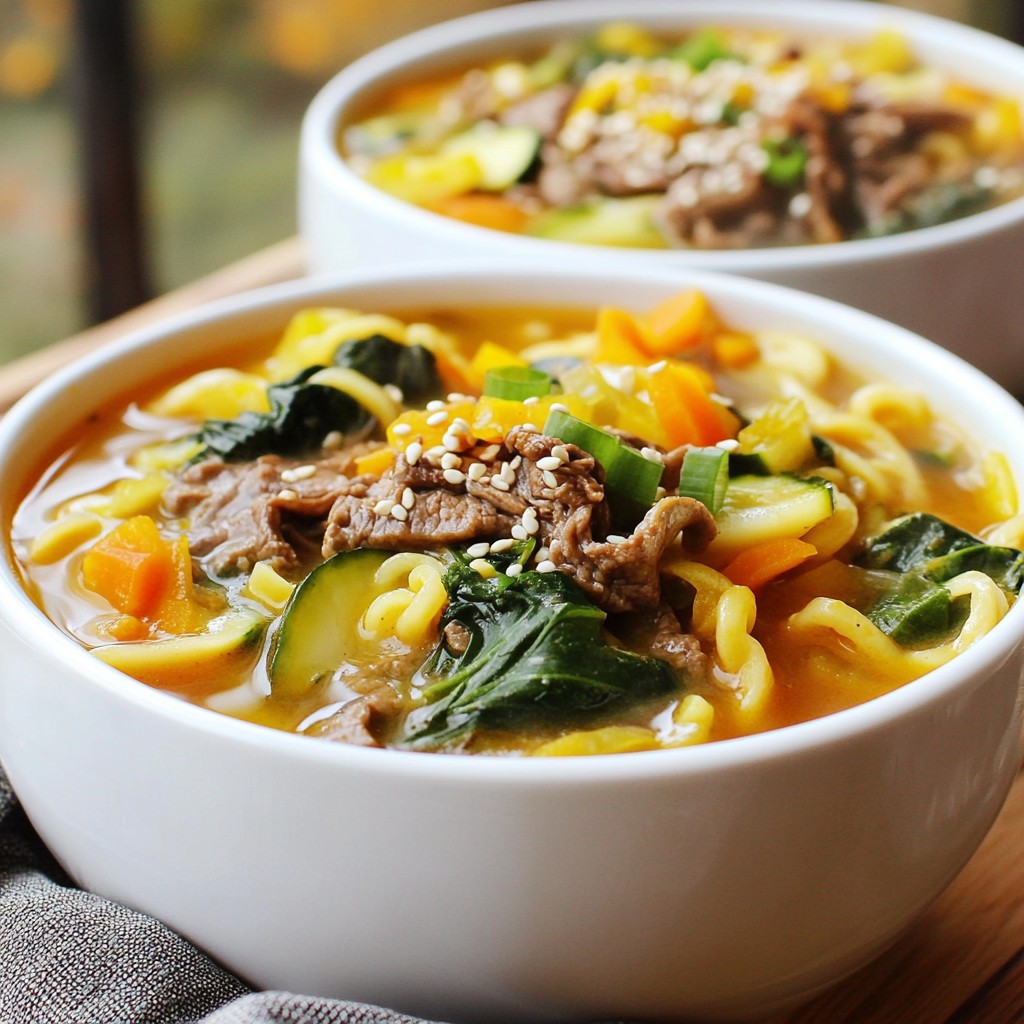
When winter chills set in, there’s nothing like a bowl of Korean Winter Noodle Soup to warm you up. This dish combines sweet potato noodles, fresh broth, and vibrant veggies for a cozy meal. I’ll guide you through the simple steps to make this comforting soup, share tips for the best flavor, and explore tasty variations. Get ready to enjoy a warm hug in a bowl!
Why I Love This Recipe
- Comforting and Hearty: This noodle soup is the perfect warm hug on a cold winter day, providing nourishment and comfort with every bite.
- Flavorful and Aromatic: The combination of ginger, garlic, and gochugaru creates a fragrant broth that fills the kitchen with mouthwatering aromas.
- Customizable Ingredients: You can easily swap in your favorite vegetables or proteins, making it a versatile dish that can cater to any dietary preference.
- Quick and Easy: With a total prep and cook time of just 40 minutes, this recipe is perfect for a weeknight dinner without compromising on taste.
Ingredients
Key Ingredients Overview
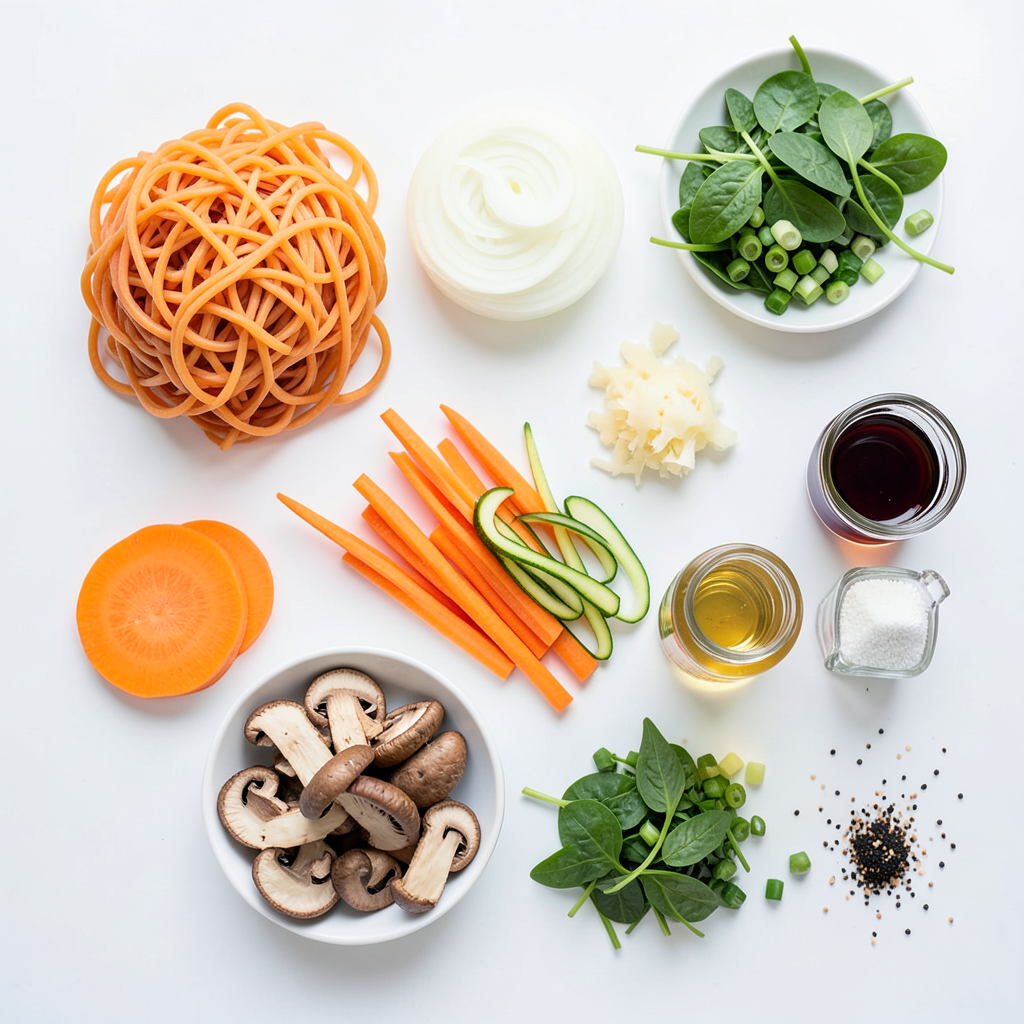
For a great Korean winter noodle soup, you need the right ingredients. Here are the must-haves:
- 200g sweet potato noodles (dangmyeon)
- 4 cups beef or vegetable broth
- 1 medium onion, thinly sliced
- 2 cloves garlic, minced
- 1 carrot, julienned
- 1 zucchini, julienned
- 100g shiitake mushrooms, sliced
- 2 tablespoons soy sauce
- 1 tablespoon sesame oil
- 1 teaspoon gochugaru (Korean red pepper flakes)
- 1 tablespoon fresh ginger, grated
- 2 green onions, chopped
- Salt and pepper to taste
- 1 cup baby spinach or bok choy
- Sesame seeds for garnish
These ingredients blend together to create a rich and warming soup.
Optional Ingredients for Flavor
You can add extra layers of flavor with optional ingredients. Consider these:
- Tofu for protein
- Kimchi for a spicy kick
- Seaweed for umami depth
- Fresh herbs like cilantro or perilla
These choices let you customize the soup to your taste.
Importance of Fresh Ingredients
Using fresh ingredients makes a big difference. Fresh veggies taste better and give more nutrients. The broth needs to be rich and flavorful, so fresh herbs and spices help. Look for vibrant vegetables and quality noodles. This ensures your soup is not just tasty, but also healthy. Fresh ingredients boost the overall experience.
Step-by-Step Instructions
Prepping the Sweet Potato Noodles
First, soak the sweet potato noodles in warm water. Let them sit for about 30 minutes. This makes them soft and easy to work with. Drain the noodles and set them aside for later.
Sautéing the Aromatics
Next, heat the sesame oil in a large pot over medium heat. Add the thinly sliced onion. Sauté for about 3 minutes until the onion softens. Then, add the minced garlic and grated ginger. Cook for another minute until you smell their great aroma.
Incorporating Vegetables and Broth
Toss in the julienned carrot, zucchini, and sliced shiitake mushrooms. Sauté these for 4-5 minutes until they become tender. Now, pour in the beef or vegetable broth. Add soy sauce, gochugaru, and salt and pepper to taste. Bring this mix to a gentle simmer for about 10 minutes. This helps all the flavors blend well.
Cooking the Noodles
Now it’s time to add the soaked sweet potato noodles to the pot. Cook these for 5-7 minutes. You want them tender but still chewy. Stir occasionally to keep them from sticking.
Finishing Touches
Finally, stir in the baby spinach or bok choy and chopped green onions. Cook for another minute until the greens wilt. Your soup is now ready! Ladle it into bowls and sprinkle with sesame seeds. Add extra green onions on top for a nice look.
Tips & Tricks
Achieving the Best Flavor
To make your soup taste great, use high-quality broth. Beef broth adds depth, but vegetable broth works too. Always sauté your onions, garlic, and ginger first. This step boosts the soup’s aroma and flavor. Don’t skip the gochugaru; it gives the soup a subtle heat. Adjust the soy sauce to your taste for a balanced saltiness. Fresh green onions and sesame seeds add a lovely finish.
Common Mistakes to Avoid
One common mistake is overcooking the noodles. Sweet potato noodles should be tender but chewy. Soak them properly first, then add them last to the pot. Another mistake is not seasoning enough. Taste your broth before serving; add salt and pepper if needed. Lastly, don’t forget the greens. They bring color and nutrients. Add them at the end so they stay vibrant.
Recommended Cooking Tools
You’ll need a large pot for this recipe. A wooden spoon helps mix everything well. Use a sharp knife for slicing your vegetables quickly. A cutting board is essential for safety. If you have a ladle, it makes serving easier. Finally, bowls for serving should be deep and wide to hold all the delicious soup.
Pro Tips
- Soaking Time: Ensure to soak the sweet potato noodles long enough for them to become pliable, as this will enhance their texture in the soup.
- Vegetable Variation: Feel free to substitute or add other vegetables like bell peppers or bok choy to suit your taste preferences.
- Flavor Depth: For a richer flavor, consider simmering the broth with some dried anchovies or mushrooms before adding the vegetables.
- Garnish for Appeal: Using toasted sesame seeds and fresh herbs not only adds flavor but also elevates the visual appeal of the dish.
Variations
Vegetarian or Vegan Options
You can easily make this soup vegetarian or vegan. Start by using vegetable broth instead of beef broth. Replace any meat with tofu or tempeh for protein. Use soy sauce that is gluten-free if needed. This keeps the flavor rich while ensuring it suits all diets.
Protein Alternatives
If you want to switch up the protein, consider using chicken, shrimp, or beef. Chicken breast can be sautéed and added for a lighter choice. Shrimp cooks quickly and adds a nice touch. Beef can be used for a heartier meal. Just remember to adjust cooking times accordingly.
Seasonal Vegetable Additions
Feel free to get creative with seasonal veggies. In winter, you can add root vegetables like parsnips or turnips. In spring, try adding peas or asparagus for a fresh taste. Summer brings options like bell peppers or corn for sweetness. This soup is a great way to enjoy fresh, local produce all year round.
Storage Info
Proper Storage Techniques
To keep your Korean Winter Noodle Soup fresh, store it in an airtight container. Let the soup cool down first. Then, transfer it to the container. This will help keep the flavors intact. You can store it in the fridge for up to 3 days. If you want to keep it longer, consider freezing.
Reheating Instructions
When you’re ready to enjoy your soup again, reheat it on the stove. Pour the soup into a pot and warm it over medium heat. Stir it often to make sure it heats evenly. You might need to add a splash of broth or water if the noodles soak up too much liquid. Heat until it’s hot, but don’t let it boil.
Freezing the Soup
You can freeze your Korean Winter Noodle Soup for later. First, freeze it without the noodles. Cooked noodles can become mushy when frozen. Once the soup is cool, pour it into freezer-safe bags or containers. Leave some space at the top, as soup expands when frozen. It can last for about 2 to 3 months in the freezer. When you’re ready to eat, thaw it in the fridge overnight before reheating.
FAQs
What type of noodles should I use for Korean Winter Noodle Soup?
For Korean Winter Noodle Soup, I recommend using sweet potato noodles, known as dangmyeon. They have a chewy texture that adds a delightful bite to your soup. These noodles soak up flavors well, making them perfect for this dish. You can find them in Asian grocery stores or online.
Can I make this recipe gluten-free?
Yes, you can make this recipe gluten-free! Use gluten-free soy sauce instead of regular soy sauce. Check that your broth is gluten-free as well. The sweet potato noodles are inherently gluten-free, so they fit perfectly into your meal.
How can I enhance the spiciness of the soup?
To boost the heat, add more gochugaru, the Korean red pepper flakes. Start with an extra half teaspoon and adjust to your taste. You can also mix in some sliced fresh chili peppers for an added kick. Just remember to taste as you go!
Is Korean Winter Noodle Soup served hot or cold?
Korean Winter Noodle Soup is best served hot. The warmth makes it comforting during cold weather. Ladle the soup into bowls right after cooking to enjoy it at its finest.
To sum up, this blog post covered all aspects of making delicious Korean Winter Noodle Soup. We discussed key ingredients, how to prep and cook, and tips for great flavor. I shared variations to suit different diets and storage tips too.
Cooking this soup is simple and rewarding. With fresh ingredients, you can create a warm dish that delights everyone. Enjoy experimenting with your recipe and make it uniquely yours. Happy cooking!