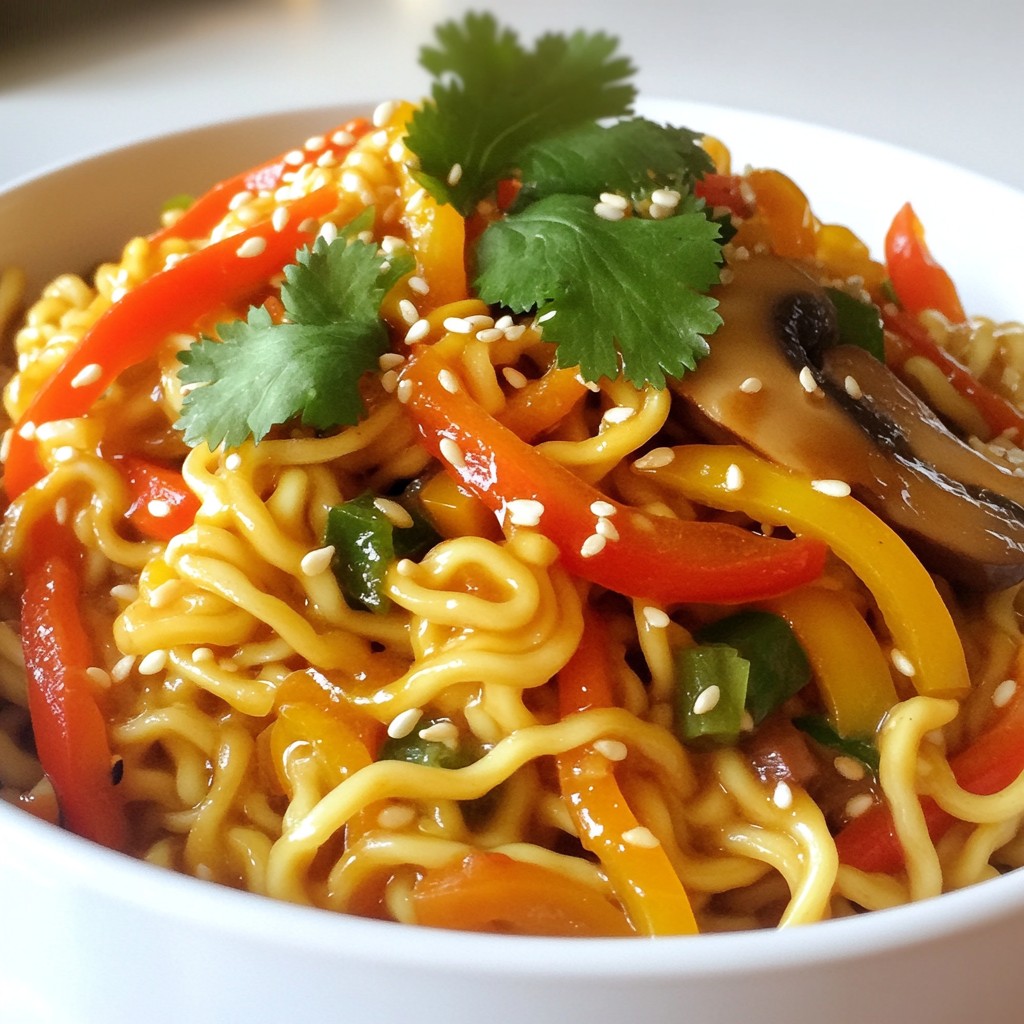
Craving a quick, delicious meal? Look no further! My Saucy Vegan Ramen Noodles are packed with flavor and easy to prepare. With simple ingredients and a few easy steps, you'll enjoy a satisfying dish in no time. Whether you're a busy professional or a home cook, this recipe will delight your taste buds and nourish your body. Let’s dive in and whip up a bowl of this tasty goodness!
Why I Love This Recipe
- Quick and Easy: This recipe comes together in just 25 minutes, making it perfect for busy weeknights.
- Flavorful and Satisfying: The combination of miso, soy sauce, and sriracha creates a rich, umami-packed broth that is utterly delicious.
- Customizable: You can easily swap out the veggies or add your favorite toppings, making it versatile for any taste.
- Healthy and Wholesome: Packed with fresh vegetables and plant-based ingredients, this ramen is both nourishing and satisfying.
Ingredients
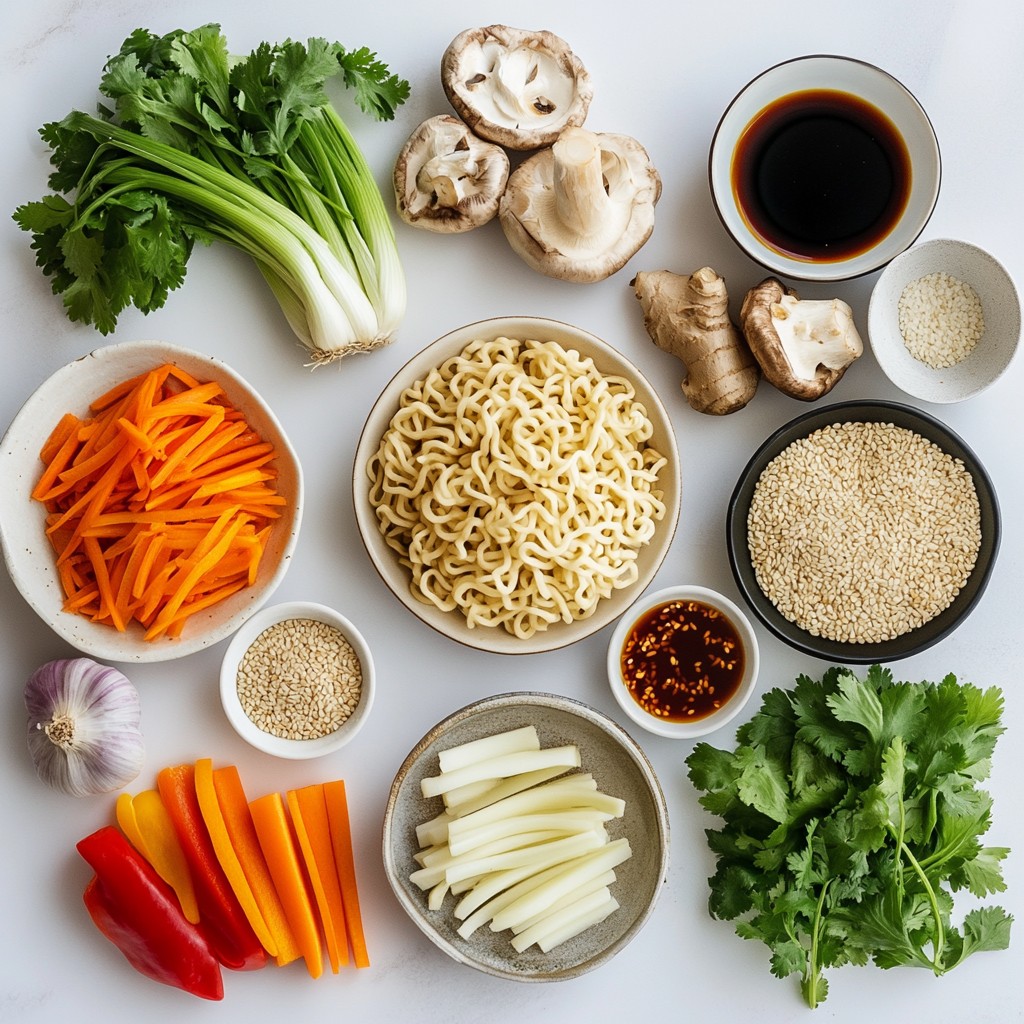
Main Ingredients
- 200g ramen noodles
- 1 tablespoon sesame oil
- 1 small onion, thinly sliced
- 3 garlic cloves, minced
- 1-inch piece of ginger, grated
- 1 carrot, julienned
- 1 bell pepper, thinly sliced
- 150g shiitake mushrooms, sliced
Saucy Ingredients
- 2 cups vegetable broth
- 2 tablespoons soy sauce (or tamari for gluten-free)
- 1 tablespoon miso paste
- 1 tablespoon sriracha
Garnishes
- 2 green onions, thinly sliced
- 1 tablespoon sesame seeds (for garnish)
- Fresh cilantro (for garnish)
I love using fresh ingredients when making my saucy vegan ramen. First, the ramen noodles are crucial. They soak up the sauce so well. I always choose high-quality noodles. Next, I add aromatics like onion, garlic, and ginger. These flavors create a warm, inviting base for the dish.
The vegetables bring color and crunch. I often use carrots, bell peppers, and shiitake mushrooms. They add great texture and nutrition. You can switch these for your favorites, like zucchini or broccoli.
Now, let’s talk about the sauce. I use vegetable broth as a base. It adds depth and richness. Soy sauce or tamari brings that salty kick. Miso paste? It gives a nice umami flavor. Finally, sriracha adds heat. You can adjust the amount to fit your taste.
For garnishes, I sprinkle on green onions, sesame seeds, and fresh cilantro. These add brightness and make the dish look beautiful. The key is to balance all these ingredients for the best flavor.
Step-by-Step Instructions
Cooking the Ramen Noodles
1. Start by bringing a large pot of water to a boil.
2. Once the water is boiling, add 200g ramen noodles.
3. Cook the noodles based on the package instructions, usually about 4-5 minutes.
4. When done, drain the noodles and set them aside.
Sautéing the Aromatics
1. In a large skillet, heat 1 tablespoon of sesame oil over medium heat.
2. Add 1 small onion, thinly sliced, and sauté for 2-3 minutes until it turns translucent.
3. Stir in 3 minced garlic cloves and 1-inch grated ginger. Cook for 1 minute until fragrant.
Adding Vegetables and Sauce
1. Add 1 julienned carrot, 1 thinly sliced bell pepper, and 150g sliced shiitake mushrooms to the skillet.
2. Stir-fry for about 5-7 minutes. The veggies should be tender but still crisp.
3. In a separate bowl, whisk together 2 cups vegetable broth, 2 tablespoons soy sauce, 1 tablespoon miso paste, 1 tablespoon sriracha, and 1 teaspoon rice vinegar until smooth.
4. Pour this sauce mixture into the skillet with the veggies.
5. Bring to a simmer and cook for 2-3 minutes until everything is heated through.
Mixing in Noodles
1. Add the cooked ramen noodles to the skillet with the sauce and vegetables.
2. Toss well to coat the noodles in the sauce.
3. Cook for an additional minute to heat everything together evenly.
Tips & Tricks
Enhancing the Saucy Flavor
To boost the flavor of your ramen, adjust the sriracha. Start with one tablespoon. If you like it hot, add more. Just remember, little by little is best. For a rich taste, add more miso. This thick paste packs a punch. Just one extra tablespoon can transform your broth.
Cooking Techniques
Perfecting noodle texture is key. Cook your ramen until just tender. If you overcook, they will turn mushy. After cooking, rinse them with cold water. This stops the cooking process and keeps them firm. Timing is also important for stir-frying your veggies. Cook them only until they are bright and crisp. This keeps their crunch and flavor.
Presentation Tips
For serving, plate your ramen with care. Use a deep bowl for a nice look. Garnish with green onions and sesame seeds for color. Fresh cilantro adds a pop of green. Arrange everything neatly for a beautiful dish. Remember, we eat with our eyes first!
Pro Tips
- Use Fresh Ingredients: Fresh vegetables and herbs enhance the flavor of your ramen, making it more vibrant and delicious.
- Adjust the Spiciness: Feel free to adjust the amount of sriracha based on your heat preference. Start with a little and add more as needed!
- Experiment with Toppings: Top your ramen with additional ingredients like tofu, seaweed, or a soft-boiled egg for extra texture and taste.
- Make it a Meal: Serve your ramen with a side of steamed edamame or a fresh salad to round out the meal.
Variations
Protein Alternatives
You can add tofu or tempeh for extra protein. Tofu absorbs flavors well. Press it first to remove excess water. Cut it into cubes and sauté until golden. Tempeh has a nutty taste. Slice it thin and pan-fry for crisp edges. Both options bring texture and depth to your ramen.
You can also incorporate edamame. These green beans are full of protein. Simply boil or steam them. Add them just before serving for a pop of color and nutrition.
Vegetable Substitutes
Feel free to swap in seasonal vegetables. Broccoli, spinach, or bok choy work great. They add freshness and crunch. Just chop them and stir-fry with other veggies.
Different mushrooms can change the flavor too. Shiitake adds earthiness, but you can use button or portobello mushrooms. Slice them and sauté for a tasty twist.
Gluten-Free Options
For a gluten-free meal, use gluten-free noodles. Rice noodles or soba made from buckwheat are great choices. They cook quickly and soak up the sauce well.
You can also substitute soy sauce with coconut aminos. It has a sweet, mild flavor. This swap keeps your dish tasty and gluten-free.
Storage Info
Leftovers Storage
To store your leftovers, keep them in an airtight container. This will help keep the flavors fresh. Place the noodles and sauce together for best taste. If you want the best texture, store them separately. This way, the noodles won’t absorb too much sauce.
Reheating Methods
You can reheat your ramen in two main ways: the microwave or stovetop. For the microwave, use a microwave-safe bowl. Heat on high for one to two minutes. Stir halfway through to warm it evenly. If you use the stovetop, place the ramen in a skillet over low heat. Add a splash of water to help it steam and stay moist.
Freezing Recommendations
You can freeze both the sauce and noodles, but it’s best to freeze them separately. This helps keep the noodles from getting mushy. To freeze the sauce, let it cool and pour it into a freezer bag. For the noodles, you can freeze them after cooking. When you’re ready to eat, thaw the sauce in the fridge overnight and reheat on the stove. Cook the noodles in boiling water for a few minutes to warm them up.
FAQs
Can I make Saucy Vegan Ramen Noodles in advance?
Yes, you can make this dish ahead of time. For best results, keep the noodles and sauce separate until you are ready to eat. This helps prevent soggy noodles. Store the noodles in an airtight container in the fridge. The sauce can also go in a separate container. When you are ready to eat, reheat the sauce on the stove. Add the noodles in and heat until warm. You can also use the microwave, but the stove gives better results.
What other sauces can I use in this recipe?
You can switch it up with different sauces. Try using hoisin sauce for sweetness. Coconut aminos provide a soy-free option. You can also experiment with peanut sauce for a creamy twist. Each sauce adds a unique flavor to the dish. Just make sure the flavors match the veggies you use.
How can I make this dish spicier?
To spice it up, add more sriracha. You can also mix in chili flakes for extra heat. Another option is to include fresh sliced chilies. Adjust the spice level to your taste. If you like it really hot, use a hot sauce of your choice. Just remember to start slow and taste as you go.
In this post, we explored the key ingredients and steps for making saucy ramen noodles. We covered noodles, aromatics, and the right spices. I shared tips on cooking techniques and presentation, plus variations for proteins and vegetables.
Saucy ramen is flavorful and fun to make. With simple ingredients, you can create a dish that’s easy to customize. Enjoy your tasty creation!