

Looking to boost your wellness with a warm, flavorful drink? Let’s make turmeric ginger vegetable broth! This broth is packed with healthy ingredients that support your body and mind. In this guide, I’ll share step-by-step instructions, tips for great flavor, and creative variations. You’ll see just how easy it is to create this tasty and nourishing broth right at home. Ready to dive in? Let’s get started!
Why I Love This Recipe
- Health Benefits: This broth is packed with anti-inflammatory ingredients like turmeric and ginger, making it a great choice for boosting your immune system.
Ingredients
Complete List of Ingredients
- 6 cups water
- 1 tablespoon olive oil
- 1 medium onion, chopped
- 3 cloves garlic, minced
- 2 inches fresh ginger, sliced
- 1 tablespoon ground turmeric
- 2 carrots, chopped
- 2 celery stalks, chopped
- 1 bell pepper, chopped (any color)
- 1 zucchini, chopped
- 1 cup chopped kale or spinach
- 2 tablespoons soy sauce or tamari
- 1 bay leaf
- Salt and pepper to taste
- Fresh herbs for garnish (like parsley or cilantro)
Health Benefits of Each Ingredient
- Water: Keeps you hydrated and helps in digestion.
- Olive oil: Contains healthy fats that support heart health.
- Onion: Rich in antioxidants, helps fight inflammation.
- Garlic: Boosts immunity and may lower blood pressure.
- Ginger: Aids digestion and can reduce nausea.
- Turmeric: Contains curcumin, which has strong anti-inflammatory effects.
- Carrots: High in beta-carotene, good for eye health.
- Celery: Hydrating and may help lower blood pressure.
- Bell pepper: Packed with vitamins A and C, good for skin.
- Zucchini: Low in calories, high in fiber for digestion.
- Kale or spinach: Loaded with vitamins, minerals, and antioxidants.
- Soy sauce or tamari: Adds flavor and contains some protein.
- Bay leaf: Adds aroma and may aid digestion.
- Salt and pepper: Enhances flavor and helps balance taste.
- Fresh herbs: Provide extra nutrients and a burst of flavor.
Substitutions for Common Ingredients
- Olive oil: Use coconut oil for a different flavor.
- Onion: Shallots or leeks can be great substitutes.
- Garlic: Garlic powder works if fresh is not available.
- Fresh ginger: Ground ginger can substitute in a pinch.
- Ground turmeric: Fresh turmeric can be used for a stronger taste.
- Carrots: Parsnips or sweet potatoes can add a twist.
- Celery: Fennel can give a unique flavor.
- Bell pepper: Use any color or skip it if you prefer.
- Zucchini: Yellow squash is a good swap.
- Kale or spinach: Swiss chard or collard greens are great too.
- Soy sauce: Coconut aminos is a soy-free option.
- Bay leaf: Dried thyme can add a different herb note.
- Fresh herbs: Use dried herbs if fresh is not on hand.
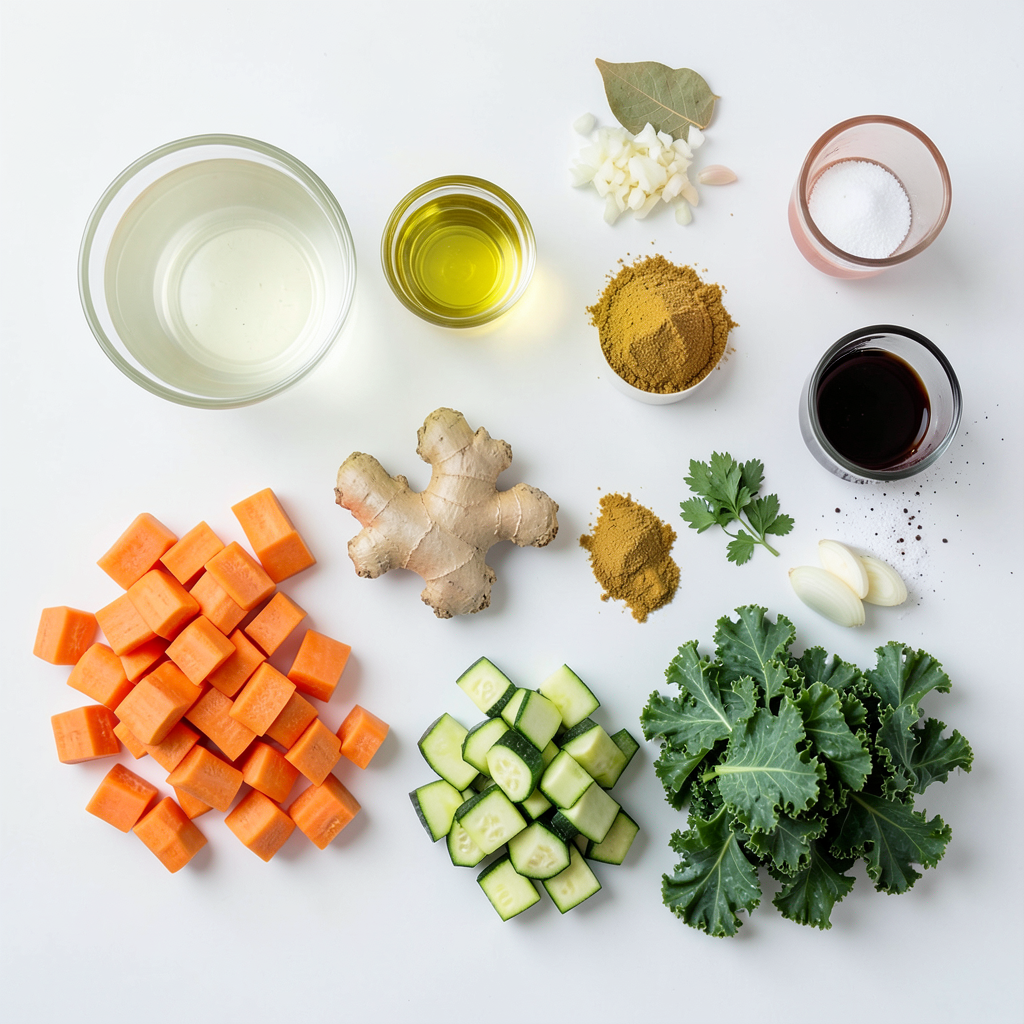
Step-by-Step Instructions
Preparing the Broth
To start, gather your ingredients and tools. You will need a large pot and a chopping board. First, heat the olive oil in your pot over medium heat. Add the chopped onion and cook until it looks clear, about five minutes. This step builds a nice base for your broth. Next, stir in the minced garlic, sliced ginger, and ground turmeric. Cook this mix for one to two minutes. You want to smell that great aroma!
Cooking Process Explained
Now it's time to add the veggies! Toss in the chopped carrots, celery, bell pepper, and zucchini. Sauté these colorful pieces for about five minutes, stirring often. This helps them soften and release their flavors. Pour in six cups of water and add the soy sauce or tamari, along with the bay leaf. Bring the whole mix to a boil. Once it bubbles, reduce the heat and let it simmer for 25 to 30 minutes. After simmering, add the chopped kale or spinach and cook for an extra five minutes. This step keeps the greens bright and fresh.
Important Cooking Tips for Best Results
- Chop evenly. This helps all the veggies cook at the same rate.
- Taste as you go. Adjust salt and pepper to your liking.
- Fresh herbs matter. They enhance the broth's flavor at the end.
- Don’t skip the bay leaf. It adds depth to the broth.
- Let it cool before storing. This keeps it fresh longer.
Following these steps will help you create a warm, nourishing broth that is great for your health. Enjoy the process and the comforting flavors!
Tips & Tricks
How to Enhance Flavor
To boost the taste of your turmeric ginger vegetable broth, use fresh herbs. Fresh parsley or cilantro adds a bright note. Squeeze in some lemon juice for a zesty kick. You can also try adding a splash of coconut milk for creaminess.
Adjusting Spice Levels
If you like it spicy, add a pinch of red pepper flakes. For a milder soup, skip the flakes and use less ginger. You can always taste it as you cook. This way, you can adjust the spice to your liking.
Best Practices for Storage and Reheating
Store your broth in an airtight container in the fridge. It will last for about 4 days. If you want to keep it longer, freeze it in portions. Use a freezer-safe bag or container. When reheating, heat gently on the stove. Add a little water to loosen it up if needed.
Pro Tips
- Fresh Ingredients Matter: Always use fresh vegetables and herbs for the best flavor and nutritional benefits in your broth.
- Customize Your Vegetables: Feel free to add or substitute any seasonal vegetables you have on hand to tailor the broth to your taste.
- Let It Simmer: Allowing the broth to simmer longer will deepen the flavors; if time permits, let it cook for up to an hour.
- Storage Tips: This broth can be stored in the refrigerator for up to a week or frozen for longer shelf life; just make sure to leave space in your containers for expansion when freezing.
Variations
Vegetarian/Vegan Options
This broth is naturally vegetarian and vegan. Each ingredient is plant-based. You can use vegetable broth instead of water for more flavor. Add any plant-based protein like tofu or beans for extra nutrition.
Different Vegetable Combinations
Feel free to mix and match vegetables. Try adding sweet potatoes for sweetness or mushrooms for umami. Broccoli, peas, or green beans can also add color and taste. The key is to use what you love.
Using Dried Herbs vs. Fresh Herbs
Fresh herbs can brighten the broth's flavor. Use parsley, cilantro, or thyme for a fresh twist. Dried herbs are good too. They add depth and are easier to store. Just remember, dried herbs are stronger. Use less than fresh herbs.
Storage Info
How to Store Leftovers
After you enjoy your Turmeric Ginger Vegetable Broth, let it cool. Use an airtight container to keep it fresh. Store the broth in the fridge. It will stay good for about 3 to 5 days. If you want to enjoy it later, freezing is a great option.
Freezing Tips for Long-Term Storage
To freeze the broth, pour it into freezer-safe bags. Leave some space at the top. The broth will expand as it freezes. Label each bag with the date. Use the broth within 3 months for the best taste. When you want to use it, thaw it overnight in the fridge or place it in warm water.
Shelf Life Considerations
The shelf life of your broth depends on how you store it. In the fridge, it lasts 3 to 5 days. In the freezer, it lasts up to 3 months. Always check for signs of spoilage before eating. If it smells off or looks strange, it’s best to throw it away. Keeping it in good containers helps maintain freshness.
FAQs
What are the health benefits of turmeric and ginger?
Turmeric and ginger both offer great health perks. Turmeric has curcumin, which fights inflammation. This helps with pain and swelling. Ginger aids digestion and can reduce nausea. Both spices boost your immune system. They also add flavor to your broth, making it tasty and healthy.
Can I use this broth for other recipes?
Yes, you can use this broth in many ways. It works well as a base for soups. You can also use it in stews or risottos. This broth adds depth to grains like rice and quinoa. Feel free to get creative!
How do I know when the broth is ready to serve?
You know the broth is ready when the veggies are tender. Look for bright colors in the carrots, bell pepper, and zucchini. The aroma should be rich and inviting. After simmering, taste it to check the seasoning. Adjust salt and pepper if needed before serving.
You learned about the key ingredients for a flavorful broth and their health benefits. We covered simple steps to prepare and cook it. I shared tips to boost flavor and adjust spice levels for your taste. You now know storage methods and how to make different variations, including vegan options.
In conclusion, making broth is easy and rewarding. Enjoy exploring each ingredient while cooking. You'll love how it warms you inside and boosts your health.