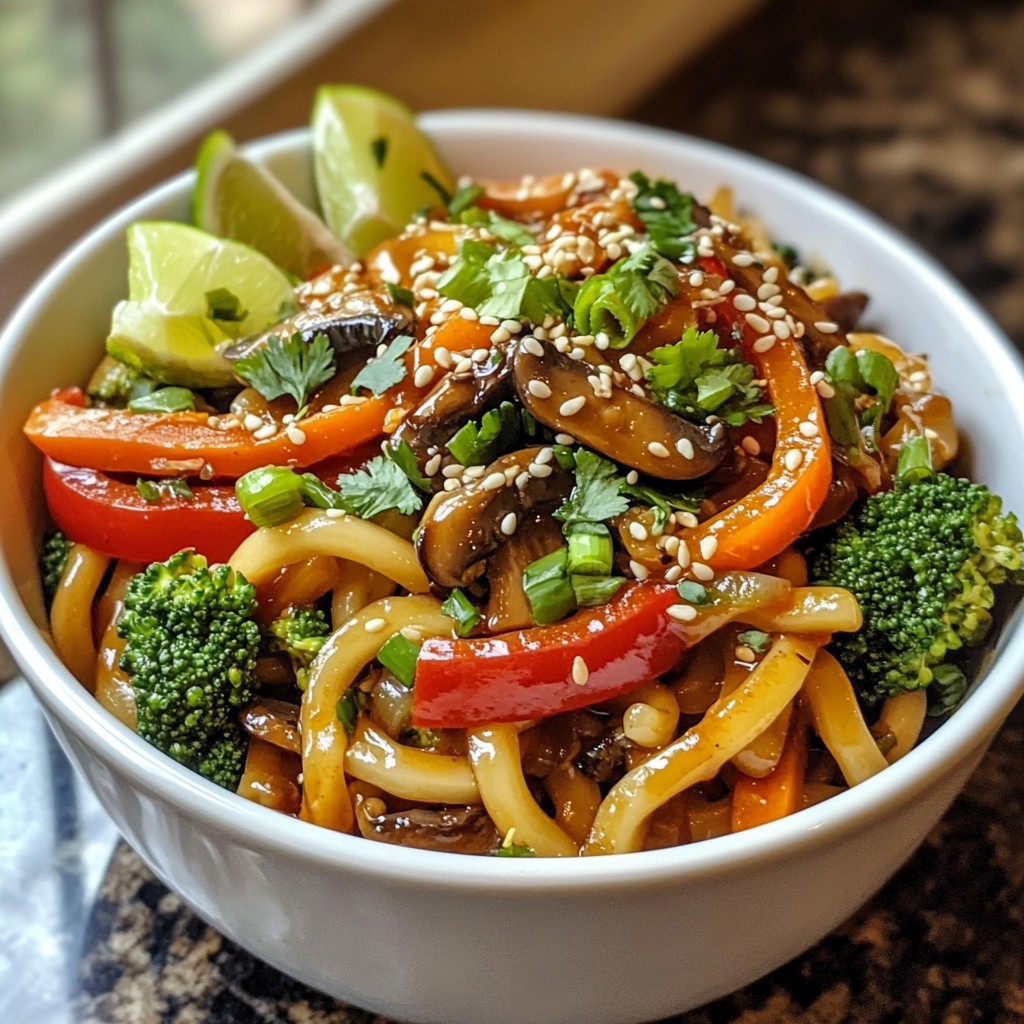
Looking for a quick and tasty meal? Yaki Udon Stir Fry is your answer! This dish packs bold flavors with just the right crunch from fresh veggies. I’ll guide you through each step, from cooking the perfect udon noodles to adding vibrant vegetables and savory sauces. Whether you're a busy parent or a novice cook, this easy recipe will elevate your weeknight dinners. Let's dive into a world of flavor!
Why I Love This Recipe
- Quick and Easy: This Yaki Udon stir fry comes together in just 25 minutes, making it perfect for a busy weeknight dinner.
- Customizable: You can easily swap out the vegetables for your favorites or whatever you have on hand, allowing for endless variations.
- Flavorful Sauce: The combination of soy sauce, sesame oil, and chili paste creates a rich and savory sauce that elevates the dish.
- Healthy Ingredients: Packed with fresh vegetables and whole noodles, this recipe is a nutritious option that doesn’t compromise on taste.
Ingredients
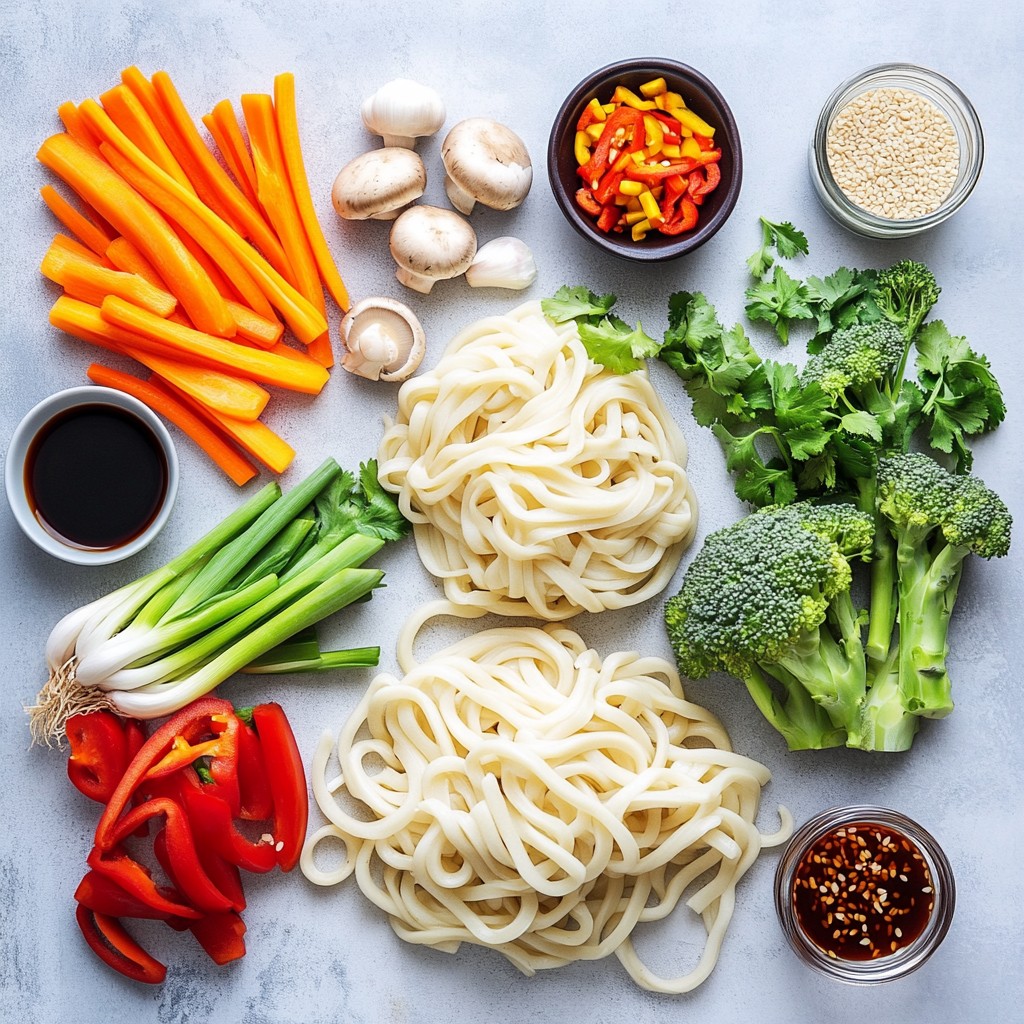
Complete List of Ingredients
- Udon Noodles
Udon noodles are thick, chewy Japanese noodles made from wheat. They are perfect for stir-frying. You can find them fresh or dried. The fresh ones save time. Just cook them according to the package.
- Vegetables Used
I love using a mix of colorful vegetables. Here’s what you need:
- 200g shiitake mushrooms, sliced
- 1 red bell pepper, sliced
- 1 cup broccoli florets
- 2 carrots, julienned
- 3 green onions, chopped
Each vegetable adds a unique taste and texture. Shiitake mushrooms bring umami. Red bell pepper adds sweetness. Broccoli gives crunch, while carrots add color and more crunch.
- Essential Seasoning Ingredients
The right seasonings make this dish shine. You will need:
- 2 cloves garlic, minced
- 1 tablespoon fresh ginger, grated
- 4 tablespoons soy sauce
- 2 tablespoons sesame oil
- 1 tablespoon rice vinegar
- 1 teaspoon chili paste (adjust to taste)
- 1 tablespoon sesame seeds (for garnish)
- Fresh cilantro (for garnish)
These ingredients create a savory, tangy, and slightly spicy flavor. Adjust the chili paste to control the heat. Enjoy your cooking!
Step-by-Step Instructions
Preparation of Udon Noodles
Cooking and Draining the Noodles Start by boiling water in a large pot. Add 400g of udon noodles and cook them for 3-5 minutes. They should be tender but still firm. Drain the noodles in a colander. Rinse them with cold water to stop the cooking process. Set them aside while you prepare the other ingredients.
Tips for Avoiding Clumping To keep the noodles from sticking together, toss them with a bit of oil after draining. This helps separate them and makes stir-frying easier.
Sautéing the Aromatics
Importance of Garlic and Ginger Garlic and ginger bring a lot of flavor to the dish. They add warmth and depth that makes Yaki Udon special. Always use fresh garlic and ginger for the best taste.
Best Practices for Sautéing Heat 2 tablespoons of sesame oil in your wok or pan over medium-high heat. Add 2 cloves of minced garlic and 1 tablespoon of grated ginger. Sauté for about 30 seconds until fragrant. Make sure not to burn them, or they will taste bitter.
Stir-Frying the Vegetables
Optimal Cooking Times for Each Vegetable Add the sliced shiitake mushrooms, red bell pepper, broccoli florets, and julienned carrots to the pan. Stir-fry these veggies for about 5-7 minutes. This keeps them tender-crisp.
How to Maintain Vegetable Crispness Don’t overcrowd the pan. If needed, cook in batches. High heat helps keep the veggies crisp. Stir frequently to ensure even cooking.
Combining Ingredients
Technique for Mixing Noodles and Vegetables Once the vegetables are cooked, push them to one side of the wok. Add the drained udon noodles to the other side. This way, you can mix them easily.
Adjusting Flavor Profiles with Sauce Pour 4 tablespoons of soy sauce, 1 tablespoon of rice vinegar, and 1 teaspoon of chili paste over the noodles. Mix everything together to coat the noodles and veggies well. Taste and adjust seasoning if needed.
Final Touches
Garnishing Techniques Remove the pan from heat. Sprinkle 1 tablespoon of sesame seeds and fresh cilantro on top. This adds a nice crunch and flavor.
Serving Suggestions Serve your Yaki Udon in deep bowls. Add lime wedges for a zesty kick. This dish looks great and tastes even better!
Tips & Tricks
Essential Cooking Tips
- Maximizing Flavor in Stir-Frying
To get the best flavor, use fresh ingredients. Fresh garlic and ginger add a punch to your dish. Always heat your wok or pan before adding oil. This helps create a nice sear on the veggies. Stir-frying in small batches keeps everything evenly cooked and crisp.
- Using High Heat Effectively
Stir-frying works best on high heat. This quick cooking method locks in flavors and keeps the veggies crisp. Make sure your oil is hot before adding ingredients. A hot pan prevents sticking and helps with browning.
Common Mistakes to Avoid
- Overcooking Noodles
Cook udon noodles just until tender. If you overcook them, they can become mushy. Drain and rinse them with cold water to stop the cooking process. This keeps them firm and ready to stir-fry.
- Sautéing Order of Ingredients
Always add aromatics like garlic and ginger first. They need time to release their flavors. Then, add harder vegetables like carrots and broccoli. Finally, add softer veggies like bell peppers. This order ensures everything cooks perfectly.
Perfect Serving Techniques
- Plating Ideas for Presentation
Serve your Yaki Udon in deep bowls. This makes it look inviting. Garnish with sesame seeds and cilantro for color. A lime wedge on the side adds a fresh touch.
- Pairing Suggestions for Drinks
Yaki Udon pairs well with light drinks. Try serving it with green tea or a crisp lager. These drinks balance the rich flavors of the dish, enhancing your meal experience.
Pro Tips
- Fresh Ingredients: Always use the freshest vegetables you can find for the best flavor and nutrition. Seasonal produce can enhance the dish significantly.
- Perfect Noodle Texture: Make sure to not overcook the udon noodles; they should be al dente before stir-frying to maintain their texture.
- Customize Spice Level: Adjust the amount of chili paste according to your taste preference. You can also add fresh chili slices for an extra kick.
- Garnish for Flavor: Don’t skip the sesame seeds and cilantro! They add not only visual appeal but also a depth of flavor that complements the dish beautifully.
Variations
Protein Additions
You can add various proteins to your Yaki Udon. Chicken, tofu, or shrimp work great.
- Chicken: Cut chicken breast into small pieces. Marinate in soy sauce, garlic, and ginger for 15 minutes. Cook it until golden brown before adding to your stir fry.
- Tofu: Firm tofu is perfect. Press it to remove extra water. Dice and marinate it in soy sauce and sesame oil. Stir-fry until crispy.
- Shrimp: Use peeled and deveined shrimp. Marinate in garlic and chili paste for a quick flavor boost. Cook until pink and tender.
Vegetable Substitutions
Seasonal veggies can change the taste of your dish. Feel free to mix it up!
- Seasonal Suggestions: Zucchini, snap peas, or bok choy can add freshness. Use whatever is in season for the best flavor.
- Frozen vs. Fresh: Frozen veggies are convenient and often frozen at peak freshness. Fresh veggies taste better but require more prep time.
Sauce Customizations
Customize your sauce to fit your taste.
- Adjusting Spice Levels: If you like heat, add more chili paste. For a milder taste, reduce the amount or skip it altogether.
- Alternatives for Soy Sauce: Tamari is a great gluten-free option. Coconut aminos offer a sweeter taste. Experiment to find what you enjoy!
Storage Info
How to Store Leftovers
To keep your Yaki Udon fresh, use a good container. Glass or BPA-free plastic containers work best. Make sure the container has a tight lid. This keeps the moisture in and prevents odors.
Store your leftovers in the fridge. They can last up to three days. To ensure freshness, let the dish cool down before sealing. This helps avoid condensation inside the container.
Reheating Guidelines
When it’s time to enjoy your leftovers, there are great ways to reheat Yaki Udon. The best method is using a skillet. Heat a little oil in the pan. Add your stir fry and warm it over medium heat. Stir often to keep it from sticking.
You can also use the microwave. Place the stir fry in a microwave-safe bowl. Cover it with a damp paper towel. Heat in 30-second bursts, stirring in between. This way, you keep the texture and flavor nice.
Freezing Instructions
Freezing Yaki Udon is easy. Start by letting the stir fry cool completely. Then, divide it into smaller portions. Use freezer-safe bags or containers, removing as much air as possible. Label the bags with the date.
When you’re ready to eat, thaw the udon overnight in the fridge. For quicker thawing, you can place the sealed bag in cold water. After thawing, reheat it using the skillet method for best results. This keeps the noodles tasty and fresh.
FAQs
What type of noodles are best for Yaki Udon?
Udon noodles are the best choice for Yaki Udon. They are thick, chewy, and hold sauce well. Other noodles, like spaghetti or rice noodles, won't give you the same texture. Udon noodles soak up flavors, making every bite tasty. You can find them fresh or dried in stores. Always follow the package instructions for cooking. This ensures they are just right for stir-frying.
Can I make Yaki Udon vegetarian?
Yes, you can easily make Yaki Udon vegetarian. Simply swap out any meat for plant-based proteins like tofu. Tofu absorbs flavors well and adds a nice texture. You can also add more veggies, like snap peas or bok choy. For a protein boost, try adding edamame. Use vegetable broth instead of chicken for a deeper flavor without meat.
How do I add more spice to my Yaki Udon?
To add more spice, you can use chili paste or fresh chilies. Start with a small amount and gradually increase it. You can also sprinkle red pepper flakes on top for extra heat. Another option is to use spicy sesame oil in place of regular sesame oil. For those who love heat, add sriracha or a splash of hot sauce before serving.
Is Yaki Udon suitable for meal prep?
Yes, Yaki Udon is great for meal prep. You can make it ahead and store it in the fridge. Use airtight containers to keep it fresh. When ready to eat, reheat it in a pan or microwave. To keep the noodles from clumping, add a splash of water when reheating. You can also prep the veggies and sauce in advance to save time.
Making Yaki Udon is easy and fun. We talked about the right ingredients, cooking tips, and storing methods. You can customize the dish with various proteins and veggies. Remember, high heat adds flavor, and the right order matters.
In the end, you can enjoy a tasty meal that fits your needs. Try different variations to find what you love most. Happy cooking!